Ramen Shop's $0 Shipping Success Secret
Struggling to export processed foods due to shipping costs and customs risks? Discover how a single rural Japanese ramen shop opened 5 overseas branches using the master franchise model. Learn the 4-step process to export your brand with $0 shipping.
Key takeaways
- The secret behind the rural Japanese ramen shop opening 5 overseas stores was exporting through licensing export to local partners without initial capital.
- Take action this week: audit the translation of your standard operating procedures (SOP) into English and check franchise regulations in your target countries.
How a Single Ramen Shop Opened 5 Overseas Stores: 4 Steps to $0 Shipping Export Marketing
A single ramen shop in rural Japan (Obuse Town, Nagano Prefecture) was on the verge of closing due to population decline. Yet, without undergoing complex food export procedures, they recently opened 5 consecutive overseas locations (PR TIMES, 2026 seminar case study).
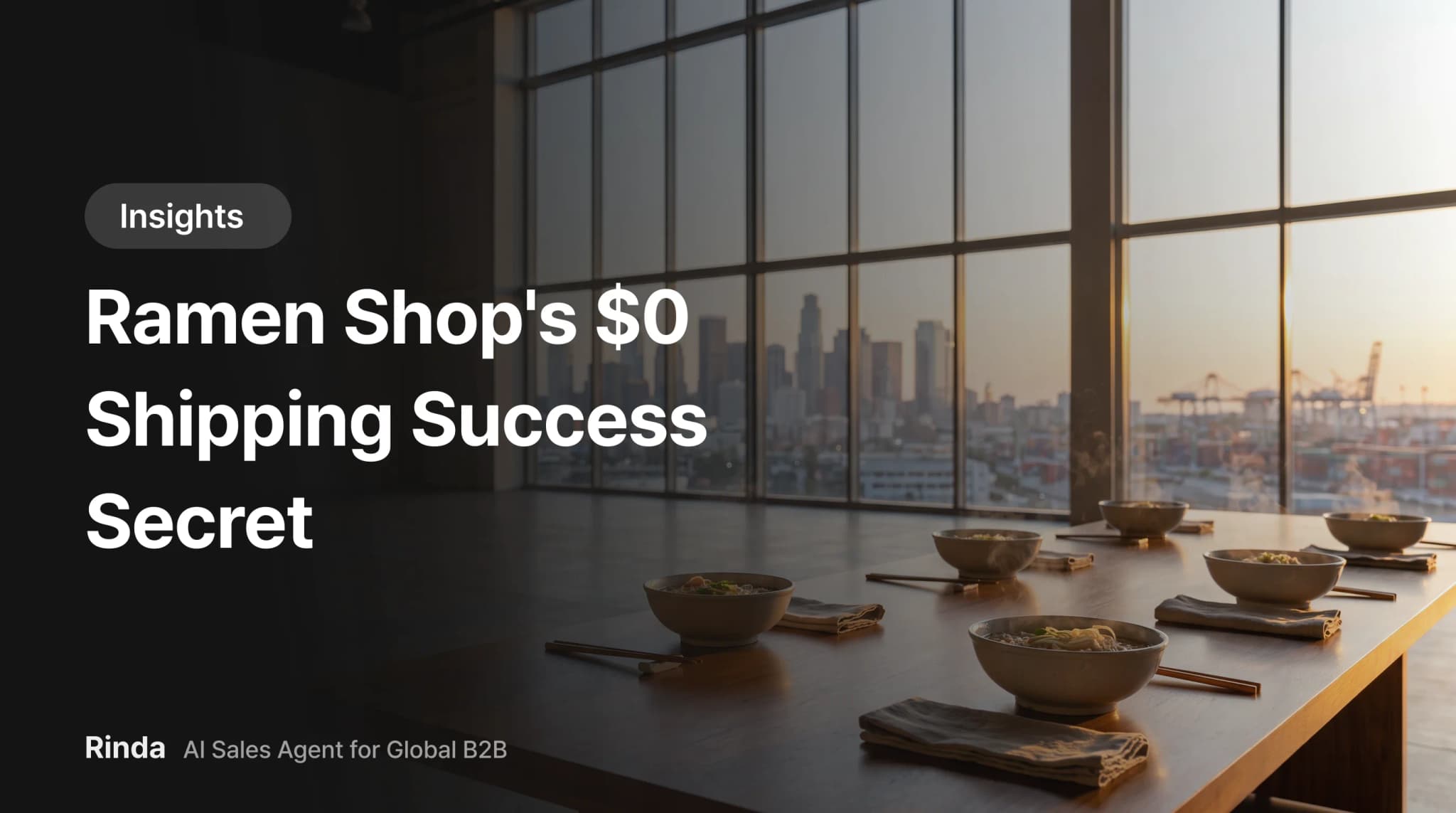
What is their secret? They didn't freeze their ramen and load it into containers. Instead, they exported their "operational know-how" with zero shipping costs.
In the second half of 2026, if you are an F&B business owner facing the hurdles of processed food export due to skyrocketing logistics costs and customs regulations, we highly recommend exploring this approach.
| Category | Direct Ownership (Traditional) | Master Franchise (Recommended) |
|---|---|---|
| Initial Capital | Hundreds of thousands to millions of dollars (Direct investment) | Virtually none (Upfront fee received) |
| Localization Risk | Fully borne by headquarters | Borne by local partner |
| Scale-up Speed | Takes several months per store | Simultaneous expansion via partner infrastructure |
As shown in the table above, for small and medium-sized enterprises (SMEs) with limited capital, the master franchise model is far more advantageous because it reduces risk and accelerates expansion.
What Do You Need to Prepare Before a Successful Licensing Export?
Before searching for local partners (buyers), make sure you have the necessary "weapons" ready for transfer.
- Trademark (IP): Trademark filing in target countries (at least secure the filing receipt).
- Standard Operating Procedures (SOP): English manuals detailed in text and video covering recipes, store management, and customer service (CS).
- Check Export Marketing Subsidies: Verify if you can receive support for English manual creation, trademark registration, and overseas buyer discovery through government programs, such as the 2026 Ministry of SMEs and Startups Export Voucher project.
Step 1: Switch from Exporting Processed Food to "Licensing Export"
With the soaring popularity of K-food, many F&B companies immediately think of exporting processed food export products. However, the reality on the ground can be quite harsh.
In 2026, volatile ocean freight rates and tightening food customs regulations by country (such as ingredient certifications and packaging labeling laws) can eat away at an SME's margins in an instant.
In contrast, licensing export requires zero shipping containers. It is a system where you hand over the rights to use your brand and your operating system (SOP) to a local partner, receiving an initial fee and running royalties in return.
Indeed, a steady upward trend in inbound inquiries looking for Korean beauty and food categories has been observed in Southeast Asia and parts of the Middle East (with variations by category and country).
Whether you treat this surging demand as a one-off "meal kit supply" or lock it down into a highly profitable revenue share across dozens of local franchise branches depends entirely on your choice of business model.
Step 2: File for International Trademarks and Check Local Regulations
The lifeblood of a master franchise expansion is legal security. If you transfer your entire system only to have the local partner suddenly change the storefront sign, you will be left completely defenseless.
Once your target country is decided, we recommend immediately initiating the international trademark application process via the Madrid Protocol. Since this can take over a year depending on the country, it is safest to at least have the "application filed" before launching active local sales.
Furthermore, laws regulating franchise businesses differ wildly from country to country, such as the Franchise Disclosure Document (FDD) requirement in the United States.
In particular, check in advance if the target country limits outbound royalty remittances. This prevents the nightmare scenario of generating massive sales locally but failing to repatriate any funds to Korea.
Step 3: Initiate "Overseas Buyer Discovery" for Master Franchise Expansion
For standard food export, finding a typical importer-distributor or vendor is enough. However, a master franchise partner is on a different level.
You must seek out a true "operating partner" who has experience running multiple restaurant locations locally, possesses solid local commercial real estate infrastructure, and has deep capital reserves.

Based on our data analysis, Korean exporters that consistently published on their English blog or LinkedIn for over 6 months saw a significantly higher volume of inbound inquiries than those that did not. However, waiting around solely for inbound leads risks missing the golden window of expansion.
Export marketing hinges on targeting. Find companies in your target market that are already operating restaurant license businesses similar to your brand, and proactively secure the contact details of their C-level decision-makers.
Step 4: Propose the Master Franchise via Your First Cold Email
Once you have your buyer list in hand, it is time to make a compelling pitch. The key to a successful cold email is not boasting about how famous you are in Korea.
The only piece of information the local partner is desperately looking for is: "How much money can I make if I bring this brand over (ROI)?"
In your very first email, make sure to clearly state the partner's projected revenue scenarios and the headquarters' support plan for store setup with concrete numbers.
Instead of blast-emailing hundreds of contacts with automated spam, we recommend narrowing your list down to 50 highly vetted, key partners and running a laser-focused outbound campaign. A single reply from a highly aligned buyer is worth more than a thousand silent contacts, completely changing your business trajectory.
Common Pitfalls to Avoid
- Missing Development Schedules (Minimum Store Openings): You sign the master franchise contract and breathe a sigh of relief, only for the partner to open just one store and leave it sitting idle for three years. This happens because of a missing clause: "Minimum of X stores opened per year." You must include a protective mechanism to immediately reclaim master rights if this commitment is broken.
- Preemption by Trademark Squatters: It is surprisingly common for companies to delay trademark filings to save initial costs, only for a prospective buyer they met at a trade show to turn around and register the trademark locally. Always secure proof of trademark filing before sitting down at the meeting table.
Author: Rinda Export Sales Research Team (Research Editor for Overseas Buyer Discovery and Export Sales Automation)
We compile highly actionable export strategies and checklists based on pipeline data from over 200 Korean exporters discovering buyers through our platforms and internal observations of Rinda.
Are you looking for the perfect global master franchise partner for your brand? Rather than wasting time on misaligned importers, finding an operating agent with local infrastructure is the critical first step in overseas buyer discovery.
Scan local partner profiles and send your first cold email using Rinda, an AI platform designed to automate overseas buyer discovery and sales outreach for exporters. If you are curious about the bigger picture of AI-driven export automation, find clear solutions on Grinda AI.
"Exporting does not always mean loading heavy goods onto cargo ships. For F&B SMEs with limited capital, the master franchise model—selling operating systems and know-how instead of physical 'processed food'—is the fastest and safest shortcut to global scaling."
Frequently Asked Questions
Q. Can a small business owner with only one store export via a master franchise? A. Absolutely. The existence of manuals and structured systems matters far more than the physical size or number of your stores. Even with just one location, if your consistency of taste (SOP) and business model are transparent, you can easily open local partners' wallets. The rural Japanese ramen shop we discussed is a powerful testament to this.
Q. Can we use government export marketing support programs to fund local partner discovery? A. Yes, you can fully leverage them. Through the 2026 Ministry of SMEs and Startups' Export Voucher programs, you can secure financial backing for buyer discovery, market research, foreign-language manual creation, and trademark filings. Please monitor the official export voucher website announcements for precise schedules and funding limits.
Want export insights in your inbox?
We'll send one email summarizing new posts from our blog and resource library.