Why 500 LATAM Trade Show Cards Got 0 Deals
70% of global buyers choose partners via search before meeting sales reps. Before spending thousands on trade shows, discover the localization strategy that uses 10% of that budget to set up local-language B2B inbound marketing and AI cold emails so buyers find you first.
Key takeaways
- 70% of global buyers filter out vendors through Google search before ever meeting a sales representative. Without digital trust assets in the local language, offline trade show meetings become useless.
- Invest just 10% of traditional offline exhibition costs to build a Portuguese and Spanish B2B inbound infrastructure. This will open a continuous lead pipeline.
- We recommend identifying long-tail keywords tailored to your target export countries' search intent today and combining them with local-language cold email automation.
Many business owners who fly out, spend thousands of dollars, set up booths in Mexico or Brazil, and dive into overseas buyer discovery share a common frustration. They collect 500 business cards on-site, but only a handful lead to actual follow-up meetings or closed deals.
What is the real reason behind this? Is trade show effectiveness truly not what it used to be?
The answer lies in Gartner's global B2B sales report. According to their research, about 70% of global buyers filter vendor candidates through online searches before ever contacting a salesperson offline.
Even if you make a stellar impression at your offline booth, the result is the same. When buyers return to their home countries and search your company name on Google, if there isn't a professional webpage available in Spanish or Portuguese, that business card goes straight into the trash.
Why Does LATAM Buyer Discovery Fail with an English Website Built for North America?
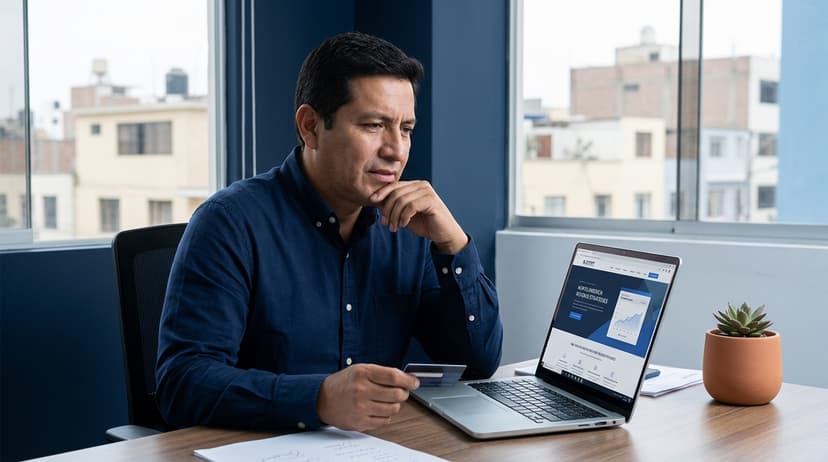
Most Korean export companies focus heavily on building a "perfect English website" when preparing for global expansion. However, when entering emerging markets like Brazil, Argentina, and Mexico, Google English SEO is only half the battle.
The situation is entirely different from North American or Western European buyers. Local managers in South America need to accurately understand technical documents or product specifications in their native language to draft internal proposals.
According to a McKinsey survey of B2B decision-makers, buyers in emerging markets consider the availability of local-language technical support and product manuals as one of the most critical indicators when selecting a partner.
No matter how sophisticated your English page is for the North American market, you cannot rest easy. If your company doesn't show up when a Brazilian buyer searches for "industrial equipment with import customs clearance" in Portuguese, you will never catch their attention through inbound search.
Ultimately, if you fail to pass the buyer's digital verification, even the highly anticipated trade show effectiveness is dismissed as an "unverifiable claim."
Localization Strategy: Cut B2B Export Marketing Costs by 90% While Boosting Inbound Leads
Booth rentals, flights, hotels, and sample logistics. Thousands of dollars vanish into thin air for a short multi-day offline event.
Yet, many exporters don't spend a single dime on smart B2B export marketing—such as localized SEO and digital content automation for the company website that local buyers will search for. Let's address this exporter's paradox.
Let's look at a consulting case from WebSnap, a B2B digital marketing agency based in Brazil. Multinational corporations from North America and Europe do not run vague brand awareness ads when entering South America. Instead, they focus their budget on building a localized B2B lead generation infrastructure.
In markets with high language barriers and complex domestic regulations—like Brazil's ANVISA (National Health Surveillance Agency) certification—digital content that clearly explains these hurdles in the local language becomes a powerful 24/7 sales representative.
| Category | Traditional Offline Trade Show | Localized Hybrid Strategy |
|---|---|---|
| Core Cost | Booth rental, flights, accommodation (Tens of thousands of dollars) | Localized SEO content, cold email infrastructure (10% of booth cost) |
| Operation | Short-term event meetings 1–2 times a year | 24/7/365 continuous inbound search exposure |
| Lead Quality | Focus on collecting business cards (Unclear purchase intent) | Driven by search intent (High purchase intent) |
| Conversion Speed | Drops sharply if follow-up is missed | Instant digital verification and automated follow-ups |
The core takeaway from this table is clear. Shift just a fraction of the budget poured into a one-time offline event toward digital infrastructure. Though it accounts for a mere 10% of the cost, you will feel the impact of a continuously open buyer pipeline.
A 3-Step Guide to Automating LATAM Buyer Discovery
Based on our observations, inbound inquiries for Korean beauty, food, and smart home appliances have recently shown a noticeable increase in South America and parts of Southeast Asia. A meaningful upward trend has been confirmed compared to the previous quarter. (However, there are significant variations by category, and exchange rate variables apply.)
To translate this opportunity into actual export performance and accelerate overseas buyer discovery, we propose a 3-step setup.
1단계: 현지 검색 의도에 맞춘 롱테일 키워드 맵핑
We highly recommend going beyond simply translating your website text using export vouchers.
The key is to discover long-tail keywords that Brazilian buyers actually type into Google. For example, specific search terms like "K-beauty skincare B2B wholesale with Brazil ANVISA certification."
Place Spanish/Portuguese content that combines local industry terms with HS codes on your website's blog or technical documentation sections. This will bring in qualified targets much more consistently than participating in trade shows 10 times.
2단계: AI 기반 해외영업 콜드메일 설계 및 발송
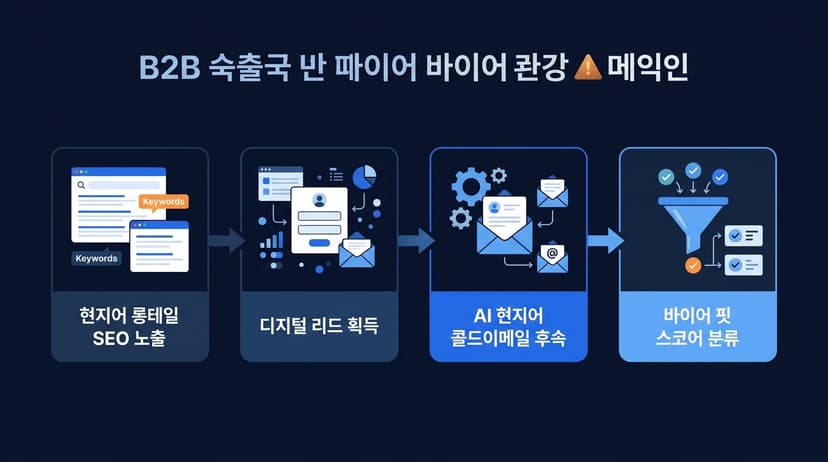
Once you capture inbound inquiries through SEO, proactive follow-up is essential.
According to internal data from the Rinda platform, companies that sent their first follow-up email within 48 hours of acquiring leads via trade shows or online channels achieved a significantly higher reply rate than those that sent them 7 days later. (The effect size may be lower in industries like heavy machinery that require long-term purchasing decisions.)
At this stage, awkward emails run through a basic manual translator are inevitably flagged as spam. A successful export sales cold email must capture the exact nuances of local business communication.
An interesting result emerges from the customer success stories on Rinda's landing page. I-Company, a Korean manufacturer of natural cooling hanji (Korean paper) bedding, secured an overseas buyer meeting in just 7 days using AI-powered precision-targeted cold emails. They entered sample discussions with premium Australian markets and even secured a spot in Singapore's Robinsons Department Store. (This is a single case study, and results vary by industry.)
When targeting South America, the power of this localized export sales cold email strategy is fully realized.
3단계: Buyer Fit Score를 통한 유효 바이어 선별
As inbound leads start piling up, the physical time of your sales representatives becomes the biggest bottleneck.
You cannot invest the same amount of effort into every buyer. We recommend implementing a "Buyer Fit Score" framework to rate leads based on customs clearance history, company size, and local distribution networks.
Devote your team's resources only to high-intent buyers who truly have the budget to pay. It is far more efficient to manage the rest of your prospects through automated nurturing campaigns.
"Spending thousands on offline booths while dedicating less than 10% of that budget to online localization is like building a gorgeous store and forgetting to hang up a sign."
Written by · Rinda Export Sales Research Team (Research Editor for Overseas Buyer Discovery & Export Sales Automation)
Based on pipeline data from 200+ Korean export companies and internal observations from the Rinda platform, we edit strategies and checklists that can be immediately applied to export operations.
Are you still unsure about how to build a digital pipeline where South American buyers find you first?
From setting up B2B inbound marketing to sending local-language cold emails, we encourage you to discover a breakthrough for global expansion with RINDA ( https://rinda.ai/?utm_source=rinda_blog&utm_medium=organic&utm_content=10_b2b ) and Grinda AI ( https://grinda.ai/?utm_source=rinda_blog&utm_medium=organic&utm_content=10_b2b ).
Frequently Asked Questions
Q. Is an English website not enough to enter the South American market? A. No, it is not. In countries like Brazil (Portuguese) and Mexico/Argentina (Spanish), where English proficiency may be limited, detailed technical documents and product brochures translated into the local language are the most critical criteria for establishing trust as a new vendor.
Q. How long does it typically take to see results from B2B inbound marketing? A. Based on the current search engine ecosystem, if you set up an accurate long-tail keyword and localized SEO strategy, initial inbound leads usually start generating within 3 to 6 months. Since this is not a one-off advertisement, continuous content optimization is essential.
Q. How does a localized SEO strategy differ from registering with a KOTRA directory? A. Public directories list you alongside hundreds of competitors, forcing you to rely on passive waiting. In contrast, localized SEO on your own website positions your company as the sole expert when a buyer searches to solve a specific problem (search intent), resulting in a massive qualitative difference in lead conversion rates.
Want export insights in your inbox?
We'll send one email summarizing new posts from our blog and resource library.