
Why US Buyers Block Your 2 AM Proposals
With the 'Right to Disconnect' gaining traction in the US, late-night proposals sent to overcome time zones are triggering spam filters and blocks. Discover targeted strategies for local business hours.
The '2 AM Proposal' That Triples Block Rates: What US Buyers Really Think
Are you staying up late to send cold emails to US buyers at 2 AM, trying to overcome the time zone gap?
"Wow, they replied so fast! Korean companies are incredibly diligent!" If you're expecting this kind of impressed reaction, we highly recommend taking your hand off your mouse right now.
Our proud culture of "24/7 availability" and "lightning-fast feedback" has become a toxic poison in the US market today. It is currently one of the leading causes triggering buyer unsubscriptions.
Global Sales Emails: Is Round-the-Clock Responsiveness Really Seen as 'Diligence'?
Export managers often try to bridge the time zone gap with sheer "passion." They believe that sending a proposal late at night or in the early hours of the morning in the buyer's local time will showcase their dedication.
However, real-world data points in the exact opposite direction. Global B2B sales research institutions show chilling results: cold emails received after working hours see spam reports and unsubscribe rates soar by nearly three times compared to those received during business hours. This is the price of failing to optimize cold email timing.

In the past, late-night emails were simply treated as "something to read tomorrow morning." Right? But times have completely changed. Now, they are perceived as "invasive contact" that encroaches on the buyer's precious personal time.
Imagine a smartphone buzzing during dinner with family. The excellent content of your carefully crafted proposal disappears, leaving only the sender's rudeness—for choosing the worst possible export proposal timing—deeply etched in the buyer's mind.
The Warning From Michigan's 'Workplace Boundaries Act'
This cold reception is now moving beyond simple business etiquette and evolving into strict legal regulation. On June 28, 2026, CBS News Detroit reported that the "Workplace Boundaries Act" was introduced in Michigan.
The "Right to Disconnect," which originated in Europe, has finally made its way to US state legislatures. This bill is quite firm: it strictly prohibits employers from penalizing employees for not responding to calls, emails, or texts outside of working hours.
Does this mean global exporters (offshore senders) will face immediate legal penalties for sending outbound sales emails? Not directly. However, practical business penalties are already in full effect.
Recently, US companies have been tightening their internal IT policies. They have significantly increased pre-filtering measures to automatically flag external emails flooding in outside of working hours as spam. Beyond individual buyers getting annoyed and blacklisting a vendor, the buyer company's mail servers may ultimately lose trust in your domain altogether.
Compliance Risks for Companies with Local Offices
For small and medium enterprises (SMEs) with local US branches or agents, the stakes are even higher.
Are you summoning local employees to late-night meetings to match headquarters' time zones, or sending work directions via messenger and email after hours? This is no longer just a flexible practice; it is a ticking time bomb for "local labor law violation lawsuits." Violating a local employee's right to disconnect under the guise of time zone differences can result in massive fines and messy legal disputes.
Therefore, you must overhaul how headquarters and local branches communicate. Establish a strict principle of asynchronous communication, allowing work to progress without requiring both parties to be connected simultaneously.
Set up systems so that work directives only arrive during local business hours, and codify this rule in your company guidelines.
Timing Over Content: How cold email scheduling drives buyer response rates
What should global sales practitioners on the ground do? It is time to accept that the physical timing of an email's arrival—the export proposal timing—matters just as much as flashy copywriting. Move away from mass blasting and completely shift your paradigm to "precise targeting of local business hours."
Observational data from US sales engagement platforms proves this. Senders who scheduled their first cold email to arrive precisely between 9:00 AM and 10:00 AM local time—the typical start of a buyer's workday—saw overwhelmingly higher reply rates than those who blasted emails randomly at dawn.
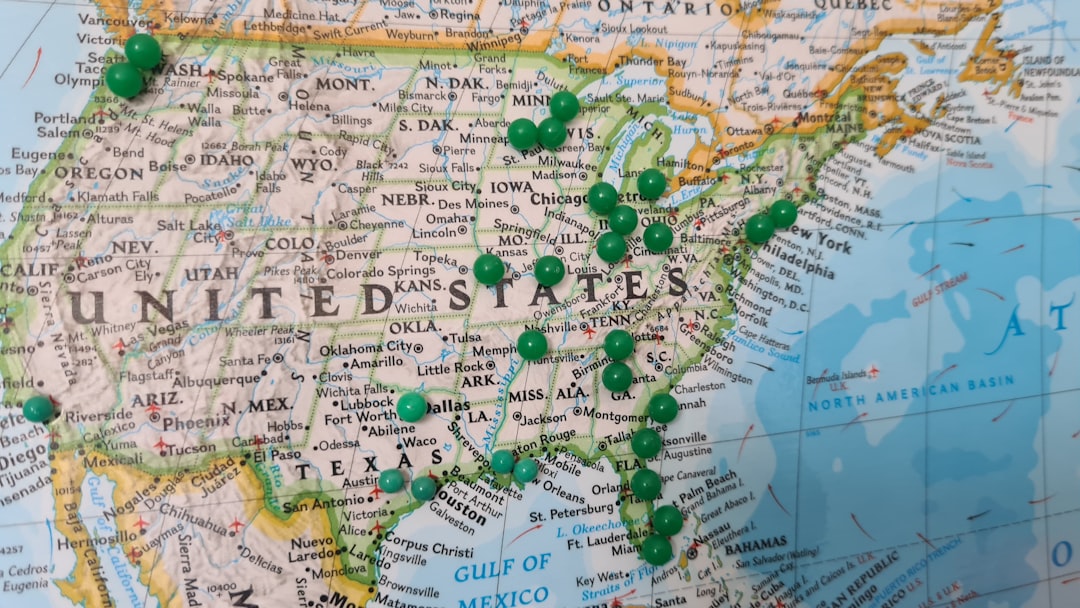
Of course, the United States is vast and has complex time zones. It spans four major time zones: EST (Eastern), CST (Central), MST (Mountain), and PST (Pacific). When it is 9:00 AM in New York (EST), Los Angeles (PST) is just waking up at 6:00 AM. Having sales managers manually set alarms to send emails four different times is practically impossible.
Here is a practical action plan you can implement this Monday morning:
- Segment your buyer list into four time zones based on their ZIP code or state.
- Utilize email automation tools to schedule your emails to land at exactly 9:30 AM local time, ideally between Tuesday and Thursday.
- Ensure any subsequent follow-ups are also strictly limited to local business hours.
The era of sleepless "passion" is over. Sharp "precision" that respects the buyer's daily routine is the new standard driving US export sales today.
Written by · RINDA Export Sales Research Team (Global Buyer Discovery & Export Sales Automation Research Editors)
Based on pipeline data from 200+ global exporters and internal observations of the RINDA platform, we compile actionable strategies and checklists for export professionals.
Want to send cold emails perfectly synchronized with your buyer's local morning routine? Try RINDA's precision-targeted sending feature for free today and target business hours in your focus markets without the hassle of time zones. Learn more about RINDA About Grinda AI
Frequently Asked Questions (FAQ)
Q. How should I send emails to a list with mixed US East and West Coast buyers? If you have to send them manually without automation tools, it is safest to blast them according to the latest time zone, which is 9:00 AM PST. By then, it will be 12:00 PM EST, landing around lunchtime on the East Coast. At least this way, you avoid invading anyone's personal time. Of course, the most reliable method is using a cold email automation solution's time zone-based scheduling feature to land precisely at 9:00 AM in each respective region.
Q. Is it okay if I can't reply immediately to a buyer's response due to the time difference? Actually, it is better. US buyers are fully aware of transpacific time differences. Rather than receiving a forced, late-night reply from a contact grinding overtime, they find it much more professional to receive a well-organized response timed perfectly to their arrival at work the next morning.
Related resources
You don't have to figure export out alone
From finding buyers to closing deals, Rinda is with you. Book a free 30-minute chat to see how we can help.