
Container rate surge and the 40% cargo twist
With fossil fuel shipments—40% of global ocean freight—plummeting, long-term container rates show signs of dropping. Prepare for the late 2026 Scope 3 demands from buyers, which are far more daunting than rate hikes.
제목: Container Freight Rates Skyrocketing? The Plot Twist of 40% Global Cargo Vanishing
Are you worried about ocean freight rates spiking again? As exporters look at their logistics quotes for the second half of 2026, their biggest concern is undoubtedly a surge in ocean freight rates driven by eco-friendly shipping regulations.
However, this industry assumption is only half-correct. 'This specific cargo,' which once made up a whopping 40% of global maritime trade, is disappearing. When this massive volume vanishes, we will actually see a plot twist: container freight rates will trend downward.
A Storm Bigger Than Green Shipping Regulations: The Vanishing of 40% of Global Cargo
Most companies only focus on rising compliance costs for green shipping regulations, such as adopting alternative fuels like methanol or ammonia. However, the real storm begins with the shrinking of the global export logistics portfolio itself.
There is a hard-to-believe statistic: about 40% of global maritime trade (by tonnage) consists of transporting fossil fuels like coal, crude oil, and natural gas (as of June 16, 2026, CleanTechnica). Even more ironic is that the vessels carrying these fossil fuels consume nearly 50% of all global maritime transport fuel just to move them.
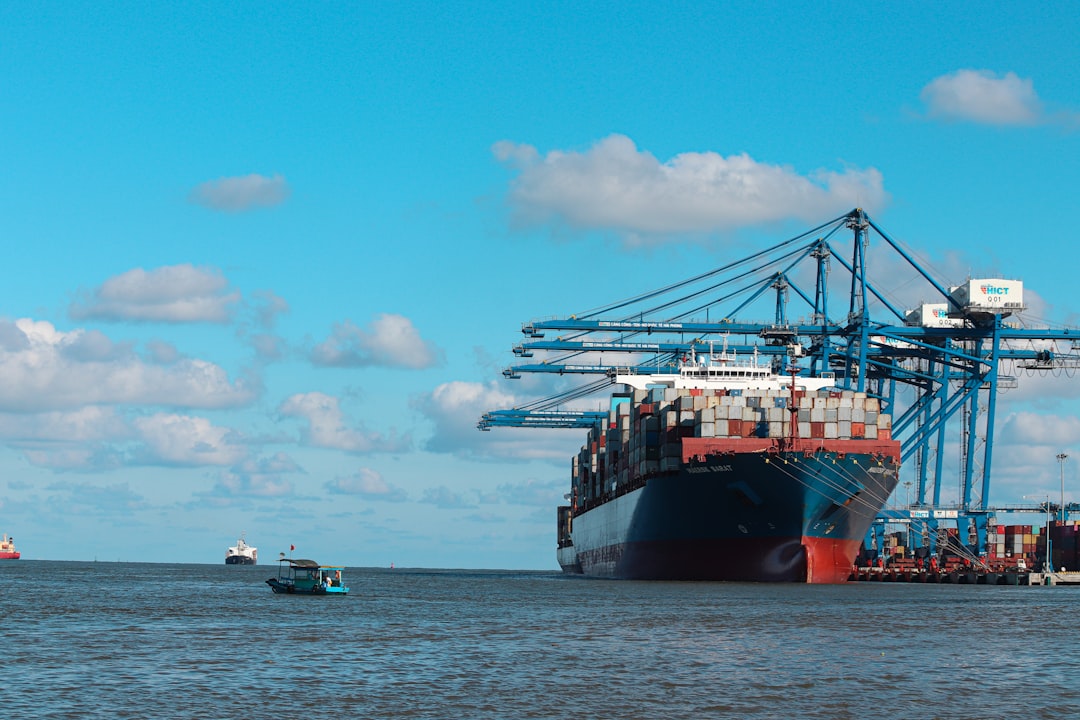
As the global energy transition accelerates, this 40% share will inevitably shrink. The single largest cargo on Earth that ships used to transport is slowly being erased from the oceans.
Why Will Container Freight Rates Fall If Maritime Cargo Decreases?
You might ask: what do bulk carriers or tankers have to do with the container freight rates we actually use? The secret lies in the butterfly effect of shipping capacity (space to load cargo).
When demand for transporting coal and crude oil plummets, the shipping industry's fleet structure will be turned upside down. Bulk and tanker operators who lose business won't just sit back and take losses. To defend their revenues, they will gradually pivot to other vessel types like container ships or push surplus capacity into the market at cheap rates.
The outcome is obvious: global shipping supply will surge out of control. Contrary to the common belief that initial logistics costs will skyrocket due to building new eco-friendly vessels, ships will ultimately be in oversupply. Naturally, this creates a market structure where ocean freight rates face heavy downward pressure.
Scope 3 Carbon Emission Requirements: A Hurdle More Terrifying Than Freight Rates
"If ocean freight rates drop, isn't that great for saving on logistics?" If you thought this, you've unfortunately fallen into a critical trap. Behind the sweet news of lower freight rates lies a brutal standard: Scope 3 carbon emissions (emissions across the entire supply chain value chain).
These days, buyers in Europe and North America aren't just asking Korean exporters for unit prices. They are strictly demanding to know how much Scope 3 carbon emissions were generated during the export logistics process. If you choose an old, emission-heavy ship just because the ocean freight is cheap, you could lose a lucrative multi-million dollar export contract overnight.
In fact, the atmosphere on the ground over the past six months has been intense. When receiving RFQs (Requests for Quote) from North American and European buyers, the inclusion of Scope 3 carbon emission proof as a mandatory requirement has risen noticeably. The low-price bidding war of 'who can slash freight rates the most' is over. Now, the rules of the game have shifted entirely to a 'race to secure eco-friendly fleets.'

Export Logistics Strategy for Late 2026: Leverage Contracts of Affreightment (COA)
The shift in the shipping supply formula and the life-or-death pressure of Scope 3 emissions make spot market transactions—where you chase the cheapest rates on the fly—highly risky. Here is a checklist of eco-friendly export logistics defenses you should review on Monday morning:
- Check Current Partners: Immediately verify how much alternative fuel your active forwarders or carriers use and whether they can accurately generate Scope 3 carbon emission data.
- Pursue COA (Contracts of Affreightment): Rather than being swayed by short-term low prices, we recommend increasing the share of COAs with carriers that have already secured eco-friendly vessels to at least 20%.
- Weaponize This in Sales: Don't hide the eco-friendly logistics channels you've secured. Use them as a sharp sales point during cold emails or meetings: "We are a vendor that helps reduce your company's Scope 3 emissions."
Author: RINDA Export Sales Research Team (Editor for Global Buyer Sourcing & Export Sales Automation)
Based on pipeline data from sourcing global buyers for 200+ Korean exporting companies and internal observations from the RINDA platform, we compile immediately actionable strategies and checklists for export operations.
A shifting freight rate landscape and highly demanding global buyers: export sales professionals will be spending significant time developing new logistics strategies to align with eco-friendly shipping regulations. Yet, even under time constraints, you cannot halt your core business of sourcing new buyers. When time is scarce, automation is the answer.
Let RINDA, which helps exporting companies find buyers, handle the tedious and complex target list extraction and cold emailing, while you focus on sharper strategic decisions. Additionally, explore customized workflow optimization solutions for your company through Grinda AI.
Q. Aren't Contracts of Affreightment (COAs) only for large corporations with massive shipping volumes? A. In the past, massive export volumes of thousands of containers were indeed required. Today, however, the trend is changing. We are seeing a steady rise in hybrid COA agreements where SMEs aggregate their volumes through logistics platforms or forwarding alliances to guarantee space and share eco-friendly vessels. Don't make assumptions—reach out to your primary freight forwarder to check if this option is available.
Q. What should I provide if a buyer suddenly demands Scope 3 carbon emission data for our export logistics? A. The most reliable standard is to contact your carrier or forwarder to obtain a 'Carbon Footprint Certificate' for the specific voyage. It is calculated based on the weight of the cargo shipped and the distance traveled by the vessel. Recently, leading digital forwarders even display this data automatically on their dashboards without you having to ask.
💡 Believing that ocean freight rates will automatically skyrocket due to eco-friendly regulations is close to an illusion. Once the fossil fuels that made up 40% of global cargo disappear, container freight rates will actually drop due to oversupply. Remember, the real hurdle blocking your export path in 2026 is not a few dollars in freight rates, but your ability to address Scope 3 carbon emissions.
You don't have to figure export out alone
From finding buyers to closing deals, Rinda is with you. Book a free 30-minute chat to see how we can help.