Lose 6 months ignoring Anthropic sales AI
The US Department of Commerce lifted export controls on Anthropic's AI in July 2026. Here is what this means for exporters holding back due to security concerns, and how to automate buyer discovery.
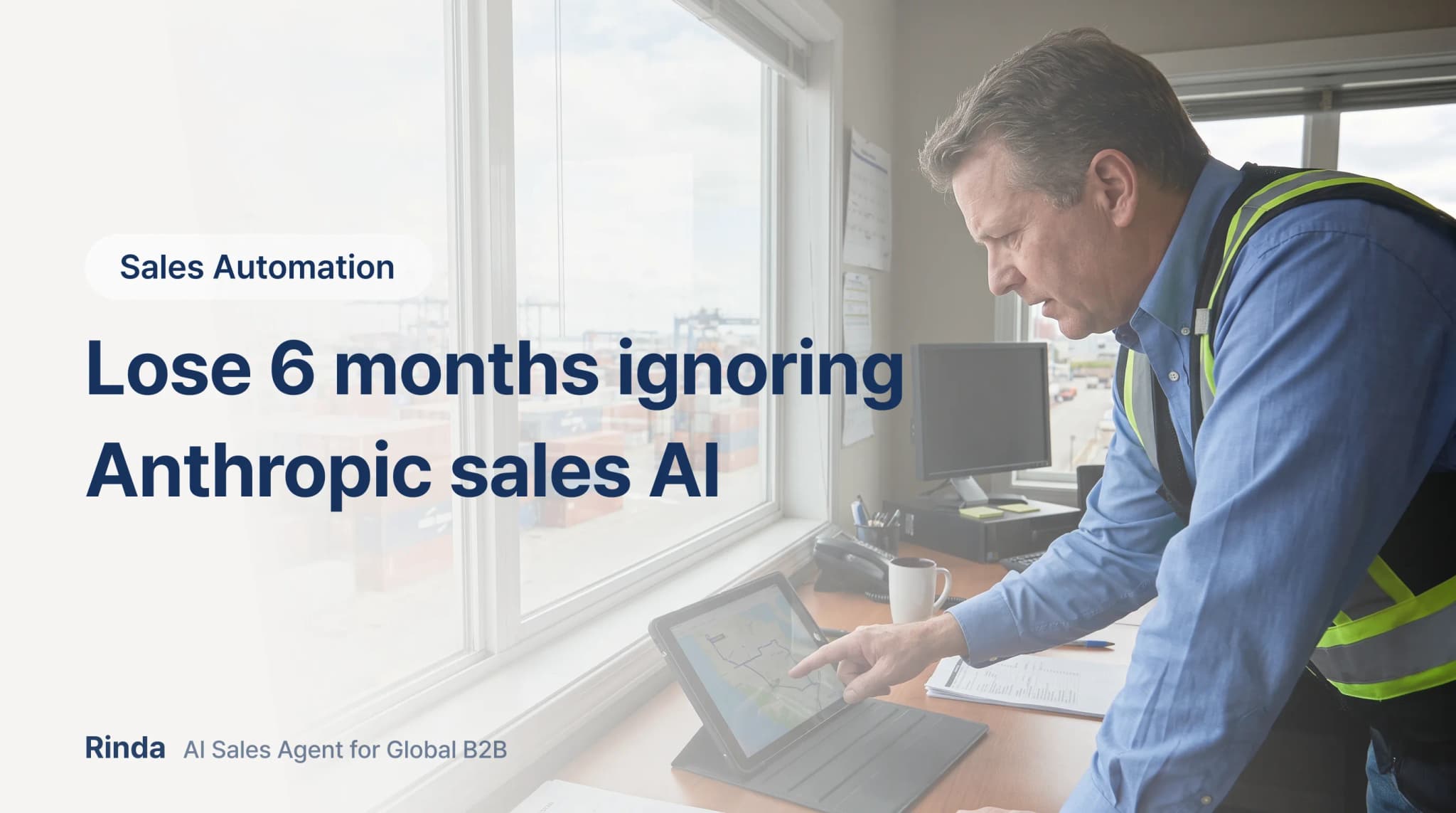
"We're afraid AI might train on our company quotes and core technical specs, leaking them to the public."
This was the last remaining excuse for exporters staring blankly at Excel sheets to find global buyers, and it officially expired on July 2, 2026.
The US Department of Commerce lifted export restrictions on Anthropic's AI models (announced by Homeland Security Today, 2026-07-02). This is not just another piece of tech news. It means the massive barrier of 'security and compliance'—the biggest fear for exporters trying to implement buyer discovery automation—has been lifted. What if you're still manually Googling and hunting for an exporter lead list even after this barrier is gone? You will hand over a 6-month pipeline gap to competitors who implemented secure AI early.
How Will the Relaxation of Anthropic Export Controls Shift Global Sales?
With the ongoing tech cold war, many believed US AI regulations would only get stricter. However, the US chose a pragmatic route of relaxation to ensure its AI models dominate global standards, legally unlocking Anthropic's models—renowned for world-class security—for international business use.
The impact of this relaxed Anthropic export control on Korean exporters is substantial. Data on corporate security from KISA (Korea Internet & Security Agency) in the first half of 2026 clearly shows this. Countless export SMEs halted the adoption of automated global buyer discovery tools out of fear of leaking sensitive quotes and core technical specs. In practice, overseas sales managers have been extremely reluctant to feed valuable buyer information or price lists into general-purpose AI with unclear security certifications.
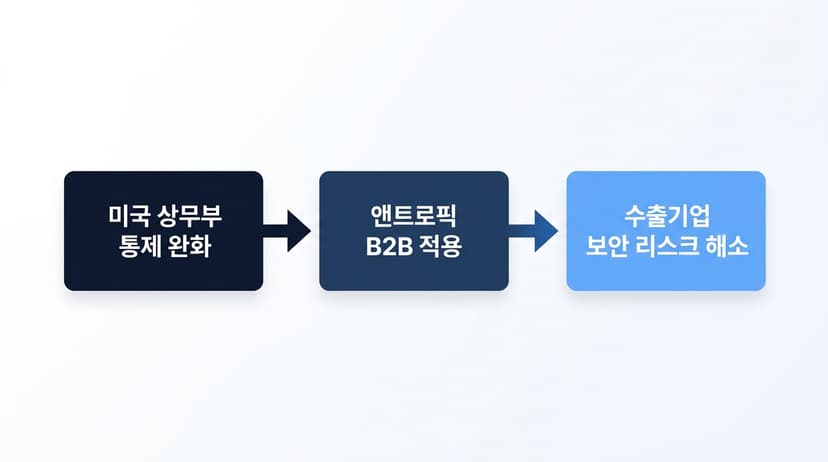
Now, high-performance language models freed from export controls have legally landed in corporate environments. Security can no longer be used as a shield to delay automation. In fact, failing to hop on the trend of secure, automated buyer discovery for global sales is the real risk.
Piercing Through Global Buyers' Strict Security Standards with Automated Buyer Discovery
In the B2B trade world, buyers scrutinize a vendor's data control as much as they negotiate price. The reason Anthropic AI fits so seamlessly into overseas sales is its notoriously strict security policy. Its architecture, which guarantees that customer data is never reused for AI training, perfectly meets the rigorous data protection standards demanded by global buyers.
There is one caveat, however. Exceptional regulatory provisions for countries of concern (high-risk countries), such as China or Russia, remain in effect. In practice, this means you must pay close attention to data routing methods when researching buyers or sending AI cold emails to these regions. Yet, according to Gartner's 2026 analysis, the direction is clear. With Anthropic leading the charge, OpenAI and Google models are expected to sequentially ease B2B enterprise regulations, giving a green light to global market entry, save for a few specific countries.
Practical Application: Closing the 'Security Gap' in Global Buyer Discovery
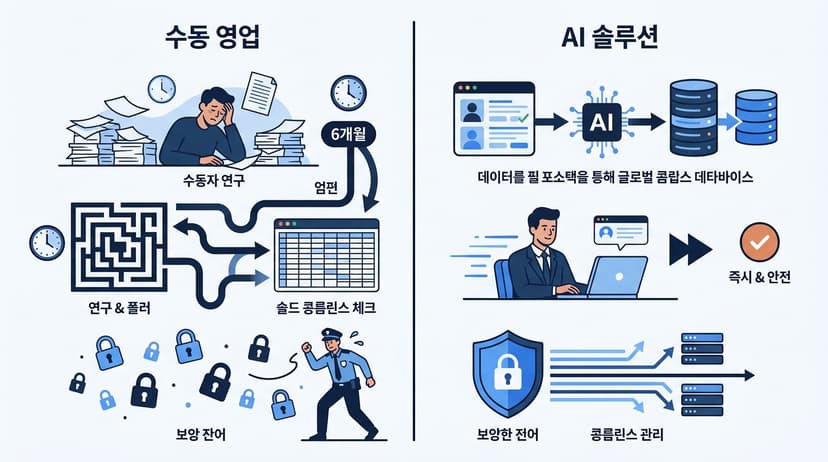
With security risks resolved, it all comes down to speed. We call the dizzying gap between companies stuck in manual research and those that have opened up AI pipelines the 'Buyer Discovery Security Gap.'
According to Rinda's platform introduction, its current coverage of global buyer databases spans over 200 countries, exceeding 800 million leads (including 12M+ in the US, 5.8M+ in Japan, etc.). In the past, filtering high-value exporter lead lists and crafting tailored proposals from this massive ocean of data was 100% manual. Now, compliance-backed AI can instantly scrape and analyze target buyer websites and draft highly personalized first AI cold emails in local languages.
Data proves why speed is everything. According to Rinda's internal observations as of Q4 2025, companies that sent their first follow-up email within 48 hours saw a noticeably higher global buyer response rate compared to those that waited 7 days. (Of course, the exact impact size may vary depending on the purchasing decision cycles of different industries.)
Have you noticed how K-beauty brands like Anua or Beauty of Joseon have exploded globally, driving a massive surge in inbound inquiries from Southeast Asia to the Middle East? Handling this flood of global opportunities manually is simply an impossible mission.
Monday Morning Action Plan for Early Adoption
To seize this golden opportunity opened by US regulatory relaxation, we recommend checking the following 'Secure Sales Automation Checklist' first thing on Monday morning:
- Data Encryption and Training Opt-Out: Verify whether the AI buyer discovery automation solution you adopt guarantees that your company quotes or product specs are not used for model training (Opt-out).
- Compliance Routing for Countries of Concern: Check if the system backend automatically filters and complies with regulatory guidelines for high-risk countries to ensure safety.
- Multilingual Industry Expertise: Test whether the system can accurately translate complex HS codes and trade-specific terminology into the local language of buyers and seamlessly weave them into AI cold emails.
Success in global sales is no longer about how many rows you have in an Excel list. It is determined by how securely you have built your pipeline on an automated platform.
Written by · Rinda Export Sales Research Team (Global Buyer Discovery & Export Sales Automation Research Editors)
Based on pipeline data from over 200 Korean exporters and Rinda's internal observations, we compile actionable strategies and checklists for export professionals.
To pinpoint genuine leads from a buyer pool spanning over 200 countries without fearing core data leaks, you need a specialized B2B platform tailored to exports, not a general-purpose AI. With the easing of US AI regulations opening the era of ultra-secure global sales automation, discover how our solution can revolutionize your buyer discovery while meeting the strictest security standards.
- Rinda (Secure Global Buyer DB & Cold Email Automation): https://rinda.ai/?utm_source=rinda_blog&utm_medium=organic&utm_content=ai_ai
- Grinda (Export-Specialized AI Platform Intro): https://grinda.ai/?utm_source=rinda_blog&utm_medium=organic&utm_content=ai_ai
Frequently Asked Questions (FAQ)
Q. What immediate impact does the relaxation of Anthropic model export controls have on SME exporters? A. The most critical shift is the arrival of 'trustworthy tools.' Many exporters have been relying on manual research using limited internal systems or Excel files due to security risks. Now, without worrying about your data being used for training, you can comfortably leave tasks like drafting multilingual AI cold emails and analyzing target websites to automated platforms.
Q. Does this mean we cannot use automation tools at all when targeting buyers in China or Russia? A. They are not entirely banned. However, because of the US Department of Commerce's export control guidelines for countries of concern, access to certain high-risk technology categories may be restricted. Therefore, it is crucial to verify before adoption whether a trade-specialized AI solution automatically filters these complex compliance issues within its system.
You don't have to figure export out alone
From finding buyers to closing deals, Rinda is with you. Book a free 30-minute chat to see how we can help.