
Why Security Apps Threaten Your Privacy
TL;DR Using a VPN on a business trip abroad is a security essential—but depending on the country, it can actually get you flagged, investigated, or hit with legal penalties. This is the 'privacy paradox.' Failing to research local regulations in advance (like China's VPN ban) can leave you in far greater danger than the threat you were trying to avoid. Checking the destination country's laws and following your company's security policy is the very first step in business travel security.
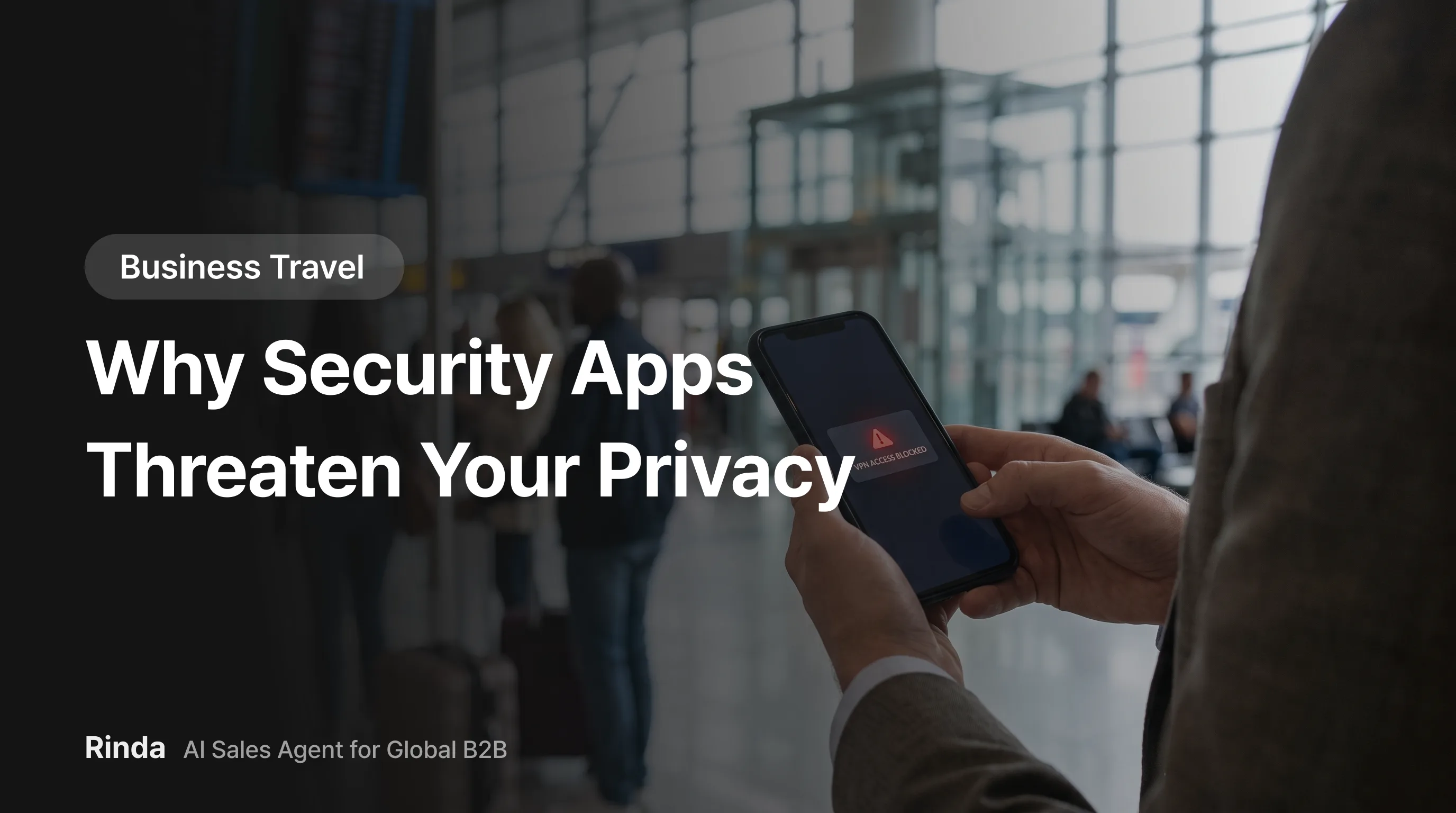
Reported for Using a Security App? The Digital Privacy Paradox
TL;DR Using a VPN on a business trip abroad is a security essential—but depending on the country, it can actually get you flagged, investigated, or hit with legal penalties. This is the 'privacy paradox.' Failing to research local regulations in advance (like China's VPN ban) can leave you in far greater danger than the threat you were trying to avoid. Checking the destination country's laws and following your company's security policy is the very first step in business travel security.
The More Secure You Try to Be, the More Suspicious You Look
The night before an overseas business trip, you install a VPN on your work phone. You need to access client emails over public Wi-Fi. Then a colleague spots you and says:
"Hey, you're using a VPN? What are you trying to hide?"
You laugh it off—but that throwaway comment cuts right to the heart of business travel security. The more seriously you take your own security, the more eyebrows you raise. That's the digital privacy paradox in action.
If you work in export sales or international business development, this situation will feel very familiar. You're heading into the field with client contracts and buyer data on your device—and using the tools designed to protect that data can simultaneously invite suspicion and legal risk.
3 paradoxical situations that security-conscious business travelers face:
- Misread by colleagues — An organizational culture that treats installing a VPN as a sign that you have something to hide
- Scrutiny from local authorities — Countries where security tools themselves create legal exposure, such as China's VPN restrictions (2023 Freedom on the Net Report, Freedom House)
- Conflict with internal IT — Cases where an unapproved VPN installation is treated as a violation of company security policy
VPNs and Local Laws: What Every International Sales Professional Must Know
The most overlooked element of business travel security is local law. A VPN is a perfectly legal tool in many countries—but its legal status can vary dramatically depending on where you travel.
📋 Pre-Trip Reference Card — VPN Regulations by Country
Share this table with your team and make it part of your standard pre-trip checklist.
| Destination | VPN Restriction Level | What Travelers Should Know |
|---|---|---|
| China | Government-unapproved VPNs banned | Violations can result in fines or detention. Coordinate with local IT staff in advance. |
| Russia | VPNs for bypassing blocked sites restricted | Confirm whether your business solution has prior approval. |
| UAE / Iran | Certain VPN services restricted or banned | Verify permitted services before departure. |
| US / EU | VPN use legal | Compliance with internal corporate security policy still required. |
From an international sales security standpoint, the moment you cross the border with a device holding buyer data and contract documents, the risk clock starts. For trips to China in particular, it is essential to coordinate with local IT contacts ahead of time to agree on an approved security solution. (2024 KOTRA Overseas Business Security Guide)
Pre-Trip Security Checklist
To avoid getting caught in these paradoxical situations, run through the following before you leave:
- Confirm VPN-related laws in the destination country
- Obtain an IT-approved VPN solution before departure
- Separate work devices from personal devices
- Plan to minimize use of public Wi-Fi
- Encrypt sensitive data (buyer information, contracts)
- Schedule a post-trip device security review in advance
This single checklist can significantly reduce your exposure to both legal and organizational risk in the field. Realistically, business travel security doesn't start on the day you leave—it starts at least a week before.
Q&A
Q1. Is using a VPN on an overseas business trip illegal? It depends on the country. In South Korea, using a VPN is not illegal in itself—but some countries, such as China, strictly restrict or prohibit the use of government-unapproved VPNs. Always check the VPN regulations of your destination country before you travel.
Q2. What are the most important security practices for export and international sales professionals on business trips? The essentials are: avoid public Wi-Fi, keep work and personal devices separate, install a trusted VPN solution before you go, encrypt critical data, and familiarize yourself with your company's security policy before departure. International sales professionals handle buyer information and contract data, so a higher standard of care is warranted.
Q3. How should companies manage security for employees traveling abroad? IT departments should provide pre-approved VPN solutions and make security training mandatory for all traveling employees. Establishing a post-trip device inspection process to catch potential threats early is also a security baseline. (Korea Internet & Security Agency KISA, 2024 Corporate Security Management Guidelines)
Start Your Trip Prep with Security
There's no reason to arrive at your first buyer meeting overseas only to find yourself sidelined by a preventable security issue. Add the checklist above to your team's standard travel process.
👉 Have questions about security, buyer discovery, or export processes in your international sales work? Reach out to Rinda for a consultation. Rinda's hands-on experts help export companies find overseas buyers and automate their sales pipeline—and they'll give you straight answers.
You don't have to figure export out alone
From finding buyers to closing deals, Rinda is with you. Book a free 30-minute chat to see how we can help.