
Before Misinterpreting the Weak Yen as a Tailtail: 3 Things SME Exporters Need to Verify Now
"Shouldn't we be pushing harder while the yen is weak?" I was recently asked this by a sales manager at a precision parts manufacturer in Aichi. With overseas inquiries increasing and unit prices rising, the financial results indeed look good. However, I felt a slight hesitation behind their words.
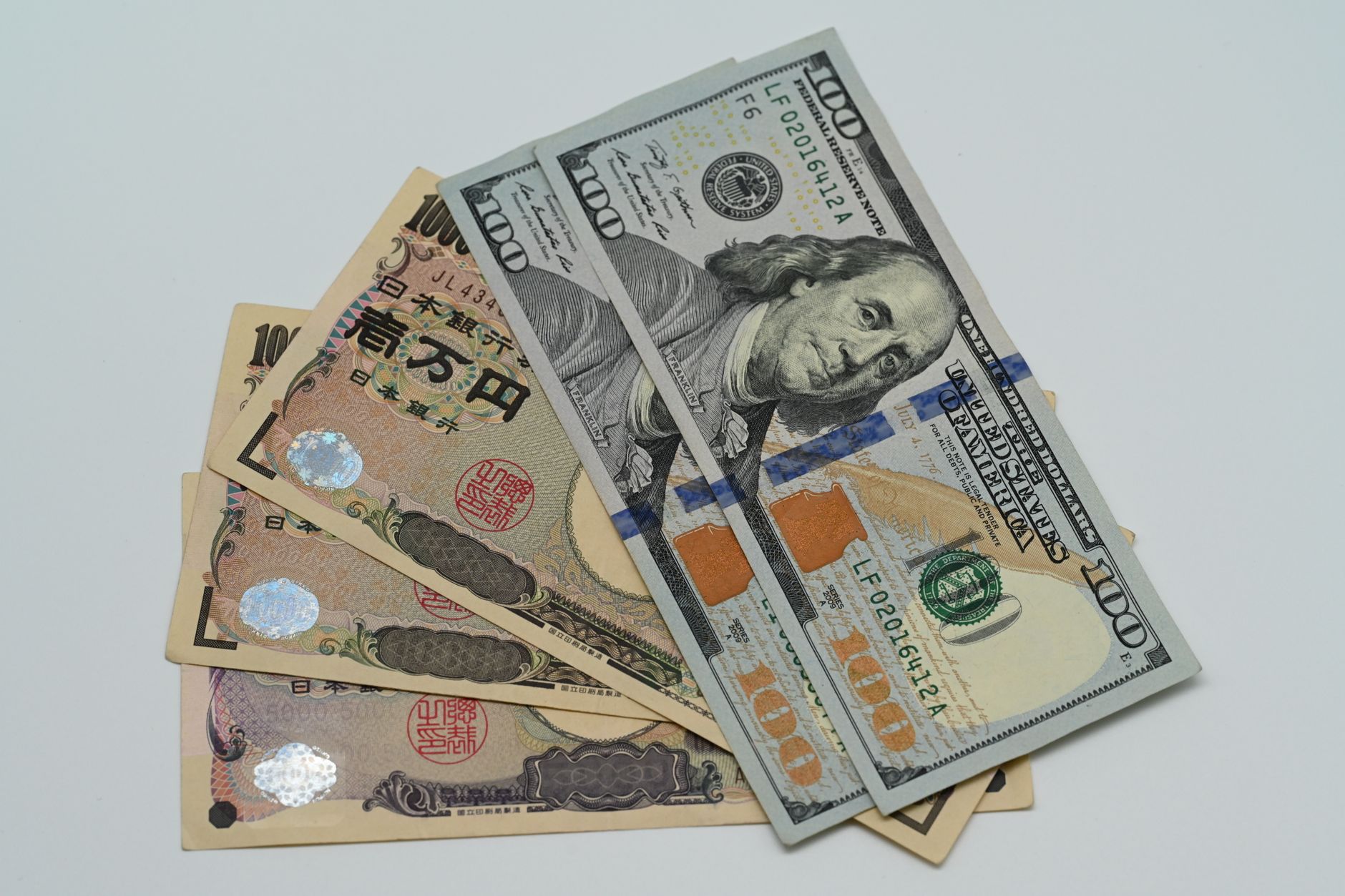
Before Misinterpreting the Weak Yen as a Tailwind: 3 Things SME Exporters Need to Verify Now
"Shouldn't we be pushing harder while the yen is weak?"
I recently heard this from a sales manager at a small-to-mid-sized business (SME) exporter who is currently enjoying the benefits of a weak yen. It was a conversation with a sales manager at a precision parts manufacturer in Aichi.
With overseas inquiries increasing and unit prices rising, the financial results indeed look good on paper. But because I felt a slight sense of unease behind those words, I decided to dig a little deeper.
In conclusion, our conversation led to the realization that while a weak yen is a "tailwind" for exporters, it also acts as a "fog" that obscures structural risks.
In this post, I have summarized the common judgment errors SME exporters make during periods of a weak yen, along with points you need to verify immediately.
"Good Numbers" Does Not Mean "Increased Competitiveness"
As the yen weakens, yen-denominated revenue rises even if products are sold at the same price. If you have $1 million in exports, that's equivalent to 130 million yen at an exchange rate of 130 JPY/USD, but 150 million yen at 150 JPY/USD. That 20 million yen difference is the result of exchange rates, not sales effort or product improvement.
This is where the trap lies.
According to the Ministry of Finance's trade statistics, while Japan’s export value has trended upward since 2022, in terms of export volume, many categories have remained flat or even declined. In other words, you are selling the same number of units, but the "sales figures" are simply inflated.
If you misinterpret this state as "our company's competitiveness has improved," your subsequent business decisions will begin to go astray.
How Do Buyers Feel When Your Price Competitiveness Increases?
From a buyer's perspective, a weak yen means "Japanese products have become cheaper." At first glance, this seems like a golden opportunity for global sales and market expansion.
However, in our interactions with procurement managers across Asia, the Middle East, and Europe, we often hear remarks like this:
"I received a quote from a Japanese supplier, and it was certainly cheaper. But when I asked what would happen to the price if the yen becomes stronger, they couldn't give a clear answer. Eventually, I put the contract on hold."
For a buyer, the relationship with a supplier is not a one-time transaction. A supplier that is "cheap only while the yen is weak" is often perceived as a liability rather than an asset.
When price competitiveness arises, whether you "maximize it as a temporary opportunity" or "use it as an entry point for a reliable trading relationship" will completely change your future outcomes.
Verify Rising Import Costs That SME Exporters Overlook
It is often said that a weak yen is a tailwind for exporters. However, there is another reality in the manufacturing shop floor.
For companies that rely on imports for raw materials, energy, and components, a weak yen is also a source of upward cost pressure.
According to the Ministry of Economy, Trade and Industry’s "White Paper on International Economy and Trade" and the Bank of Japan’s Corporate Goods Price Index, the rise in import prices since 2022 has clearly impacted the cost structure of the manufacturing industry. While your dollar-denominated income from exports increases, if your manufacturing costs are also bloating due to the weak yen, you must verify whether your actual margins are truly expanding.
I have heard from SME owners who admitted, "Sales went up, but our profit margins actually fell."
3 Key Figures You Must Check Today
While this involves specific financial analysis, here are three indicators you can check immediately:
1. Changes in Gross Profit Margin Compare your gross margin before the yen weakened versus now. If your sales are increasing but your gross margin is shrinking, rising costs are eating into your profits.
2. Trend in Dollar-Denominated Export Prices If you keep your yen-denominated price fixed and the dollar-equivalent price drops, you may win orders in the short term, but you are raising the buyer's expectation that your product is "cheap by default." The issue then becomes whether you can pass on price hikes when the yen eventually strengthens.
3. Foreign Exchange Exposure on Accounts Receivable If it takes 60–90 days from contract to payment, exchange rates will fluctuate in between. If you haven't hedged (a transaction to fix future exchange rates), you risk suffering exchange losses.
If you decide to "go on the offensive because of the weak yen" without grasping these three points, you will likely face unexpected numbers down the road.
Identify Markets That Are "Currently Ripe" and Products That "Win Even Without a Weak Yen"
I have warned about the dangers of blind optimism driven by the weak yen. However, there are indeed times when a weak yen is the perfect time to strike.
What matters is narrowing your focus: "In which market, with which product, and at what timing?"
Choosing a Market: Prioritize Markets Where Dollar-Based Transactions Are Standard
Markets that benefit most directly from a weak yen are those where dollar-denominated trade is the standard, such as ASEAN, the Middle East, and North America.
On the other hand, if you deal heavily with the Eurozone, you must monitor the Euro/Yen movement in addition to the Dollar/Yen. When the Euro is weak against the Dollar, the price competitiveness of Japanese products in Europe cannot be evaluated by the Yen/Dollar rate alone.
According to JETRO data, China, the US, and Taiwan remain the top export destinations for Japan by value (JETRO "Japan's Trade Statistics"). However, considering growth rates and changing business customs, the potential for expanding exports to ASEAN continues to attract attention.
Choosing a Product: Be Wary of Products That "Only Sell Because of the Weak Yen"
It is essential to distinguish between products that received more inquiries because the price dropped and products that are valued for their intrinsic quality and technical prowess.
If you expand your market using a flagship product that "can fight only because of the weak yen tailwind," your business may come to a halt as soon as the exchange rate reverses.
Conversely, if your product was already valued for its technology and is now more accessible due to the weak yen, then it is the perfect time for a real offensive.
Whether you are gathering frank buyer feedback on this distinction during your lead generation process will determine your mid-to-long-term success.
What to "Prepare" During the Weak Yen Period
Periods of high profit due to the weak yen are actually the best time to "build a structural export foundation."
Here are three things that will pay off later if you do them while you have some breathing room:
1. Build Buyer Relationships Based on "Trust," Not "Price"
Returning to the buyer's comment from earlier, the most robust export strategy is to become a supplier that buyers "want to continue working with, even if exchange rates move."
This is not built by lowering prices, but by consistently demonstrating that "prices may be slightly higher, but quality is stable," "we stick to deadlines," and "we communicate quickly."
In our observations through the RINDA platform, companies with long-term, stable trade relationships tend to highlight "reliability" over "price" during their very first contact.
2. Diversify Your Export Destinations
While sales are good, it is tempting to think, "We’re fine with our current major clients." However, being overly dependent on one or two large buyers is a structural vulnerability.
Multiple variables beyond your control—exchange rates, geopolitical risks, changes in a buyer's business situation—are always at play.
By investing in new buyer acquisition while business is good, you are effectively hedging risk while securing your next opportunity for growth.
3. Prepare for Dollar-Based or Local Currency Transactions
Companies that insist on "we only contract in yen" are essentially forcing exchange rate risks onto their partners. If a buyer prefers a dollar-based contract, insisting on yen-based trade becomes a disqualifying factor.
If you establish mechanisms for managing the foreign exchange risks associated with dollar-denominated trade (such as forward contracts or options) before your trade volume surges, negotiations will become much simpler.
Conclusion: "Selling Because of the Weak Yen" vs. "Selling Despite the Weak Yen"
While the weak yen is a clear tailwind for Japanese exporters, if management decisions are made by confusing this tailwind with "improved company competitiveness," you will struggle when the wind stops blowing.
"I cannot control the exchange rate. That is why I believe the only answer is to create reasons for us to be chosen, regardless of the exchange rate."
That was what the sales manager from Aichi told me at the end of our talk. Perhaps right now, during this weak yen period, is the perfect time to ask yourself that very question.
I’ll leave you with three questions to verify now:
- Is our gross profit margin maintained or improved compared to before the weak yen?
- Are buyers purchasing "because the price dropped," or because of our "quality and reliability"?
- How much of our current trade relationship will remain if the yen returns to the 120s?
Being able to answer these three points with confidence is the foundation of "turning the weak yen into a true opportunity."
Frequently Asked Questions
Q1. How can we minimize exchange rate risk while benefiting from the weak yen?
A. The most realistic approach is a combination of "currency hedging" and "transparent pricing conditions with the buyer." Use hedging tools like forward contracts to lock in rates for a certain period, and incorporate "price adjustment clauses based on currency fluctuations" into your contracts to maintain relationships even in a strong yen environment.
Q2. What should an SME focus on when acquiring new buyers during a weak yen period?
A. It is crucial not to make "low price" your only selling point. While the perceived value of a weak yen is a useful gateway, highlight your strengths beyond price—such as quality, delivery time, and after-sales support—from the very first contact to build a lasting relationship. An overseas sales style that emphasizes long-term "partnership" from the start is the most efficient in the mid-to-long term.
Q3. How do you distinguish between "products that only sell due to the weak yen" and "products with inherent competitiveness"?
A. The simplest method is direct interviews with existing buyers. You can gauge price sensitivity by asking, "Would you continue to purchase even if the price increased by 10–15%?" Evaluating whether the product received inquiries or traction before the weak yen started is also a key indicator. Products that are valued regardless of price fluctuations should be the core of your export business.
RINDA Japan Market Desk · Focused on Go-To-Market for Korean exporters entering Japan Editor of the Korea -> Japan B2B Entry Playbook
If you have any questions about overseas exports or need advice on your specific situation, please feel free to leave a comment.
#GlobalSales #ExportBusiness #JapanMarketEntry #ColdEmail
Start your journey with Rinda today!
Rinda | B2B Global Sales AI Agent for International Expansion
For consultations or inquiries, please reach out via LINE anytime.