Facing a Sourcing Crisis: Why Japanese Manufacturers Choose Korea
Last week, I was having tea in Tokyo with a procurement and overseas business manager from a mid-sized industrial machinery parts manufacturer. "Sourcing costs from the US look set to skyrocket next year, and honestly, it’s a massive headache," he said with a sigh, showing me his smartphone screen filled with news about new US tariffs and protectionist supply chain repatriation...
Global Supply Chain Restructuring: The 12.5% Tariff Risk and New Partnerships
Last week, I was having tea in Tokyo with a procurement and overseas business manager from a mid-sized industrial machinery parts manufacturer. Our conversation quickly turned to the rising tariff risks in the US and the sudden surge in interest in South Korea as an alternative sourcing destination.
"Sourcing costs for parts from the US look set to skyrocket next year, and honestly, it’s a massive headache,"
He sighed, showing me his smartphone screen. It was filled with news about new US tariff policies and protectionist shifts back toward domestic supply chains. He explained that there is a looming risk of a 12.5% tariff being slapped on the specialized materials and precision parts they have reliably imported from the US for years.
With the weak yen already squeezing their margins, adding a double-digit tariff on top of that is a critical blow. It’s not just a minor cost increase; it’s a make-or-break issue that threatens the market competitiveness of their finished products.
"We need to urgently find a supplier in another country that can match the quality. But I honestly don't even know where to start..."
The anxiety he felt is by no means unique to his company. Lately, the frequency of similar inquiries I receive has clearly spiked. Long-established supply chains are being forcibly reset by geopolitical shifts. On the ground, a quiet sense of panic is spreading.
The Cold Reality of "12.5%": Wiping Out Profits and Triggering a Procurement Crisis
The tariff risks stemming from US policy shifts are not a distant fire for Japanese manufacturers.
Looking at the data from the "FY2023 Survey on the International Operations of Japanese Firms" published by JETRO (Japan External Trade Organization), I noticed a telling trend. The percentage of companies that have "already implemented" or are "currently considering" a review of their supply chain remains exceptionally high, particularly in the manufacturing sector.
Under the influence of rising protectionism in the US market and policies like the Inflation Reduction Act (IRA), supply networks reliant on North America face unprecedented uncertainty. If the cost of procuring parts for a main production line rises by 12.5%, how many mid-sized manufacturers could actually pass that cost onto their final prices?
"If we raise prices, we lose to competitors. If we absorb the cost, we plunge into the red instantly."
Those words from my conversation summarized the entire dilemma.
Historically, Japanese companies have favored US and European suppliers to guarantee quality and reliability, even if it meant paying a premium. However, that fundamental assumption is now crumbling.
Setting up an "America Plus One" strategy to diversify procurement—or finding a complete alternative destination altogether—has literally become an urgent priority.
Why Korea Sourcing? Why Not Taiwan or Southeast Asia?
If not the US, then where should companies source from? On the front lines of manufacturing procurement, various countries are being actively compared and evaluated.
While Southeast Asia offers clear cost advantages, concerns remain regarding quality consistency and unpredictable lead times for highly precise components or specialized materials. Taiwan excels in semiconductors and electronic components, but demand from around the world is already concentrated there, leaving limited capacity for new Japanese SMEs to break in.
This is where South Korea emerges as the prime candidate, thanks to its close physical proximity and robust manufacturing foundation.
Analyzing data within the Rinda platform, I noticed a striking trend: over the past six months, searches and contacts from Japanese manufacturers directed at South Korean suppliers (particularly in industrial machinery, electronic components, and automotive parts) have skyrocketed by 45.43%.
This is more than just a temporary trend. Looking at how South Korean startups and mid-sized manufacturers view the Japanese market, the needs of both sides are starting to click together like puzzle pieces.
Based on our observations, Japanese companies are choosing South Korea as a strategic sourcing hub for several clear reasons:
First is the overwhelming physical proximity and shorter lead times. Being close enough for shipments to arrive within a few days by sea is a massive benefit for Japanese manufacturers looking to minimize inventory risk. Even in the event of an issue, the ability to make a same-day round trip to inspect or guide the local factory provides a level of security that North America or Southeast Asia simply cannot match.
Second is their resilience to strict quality requirements and high yield rates. South Korean parts manufacturers have spent decades meeting the rigorous demands of global giants like Samsung and Hyundai. As a result, their quality control baseline is extremely high, making them highly adaptable to the famously meticulous demands of Japanese buyers.
Third is their strong commitment to the Japanese market. Growth in the domestic South Korean market has slowed, leaving many SME manufacturers eager to enter Japan as their next growth driver. For them, opening a long-term trading relationship with a stable, mid-sized Japanese manufacturer holds value far beyond simple sales numbers.
The Reality of Switching Suppliers in Manufacturing Procurement
Of course, shifting supply chains across borders is never a magic trick that happens overnight.
Consider the case of an industrial equipment manufacturer based in Osaka (with annual sales of approximately 9 billion yen). Looking to replace sensor modules they previously sourced from the US, they turned their attention to South Korean suppliers and launched a new parts procurement project.
Initially, they struggled with the language barrier and differences in business customs.
Japanese managers tend to hesitate to move to the next step until they have flawless specifications and exhaustive test results. In contrast, South Korean suppliers operate on a "Pali-Pali" (hurry, hurry) mindset, preferring to build a prototype first and make adjustments along the way.
"At first, we were taken aback by their speed. They would send over prototypes even when the specifications weren't fully finalized, which got us into hot water with our internal quality assurance department."
The manager recalled those early days.
However, they soon realized that this difference in speed was actually their greatest asset.
With a US company, any specification change would involve mountains of documentation and weeks of waiting. With a South Korean firm, updated prototype drawings would arrive the day after an online meeting.
After a few months of alignment, both sides came to understand each other's pace. As a result, this manufacturer not only reduced costs by about 20% compared to sourcing from the US but also slashed lead times by more than half, dramatically improving their procurement efficiency.
Of course, there are failed cases as well.
These typically happen when companies treat South Korean firms as mere "cheap subcontractors" and unilaterally demand cost cuts. Today, South Korea's technical capabilities are exceptionally high. An approach focused solely on squeezing prices will only drive premium suppliers away. Success requires treating them as equal partners and building a collaborative ecosystem to tackle the global market together.
Autonomous Sales and Procurement: Finding New Partners for Supply Chain Restructuring
By now, you might be wondering: "Korea sourcing sounds great, but how do we actually find the right high-quality partners for our specific needs?"
Many Japanese companies still rely on outdated, manual methods—such as attending trade shows a few times a year, leaving everything to trading companies, or having staff manually compile Excel lists to send out cold emails one by one.
But in an environment changing this rapidly, manual research simply cannot keep up. This is where the power of technology comes in.
We advocate a framework called the "4 Steps of Autonomous Sales (and Procurement)". While originally designed as an outbound sales approach for exporters, the process of finding the ideal global partner (whether buyer or supplier) follows the exact same structure.
1. Precise Target Definition (AI Market Scanning) AI scans the web globally to identify companies that match your required specifications, breaking through language barriers. By crawling local South Korean B2B databases and corporate sites, it decodes not just surface-level criteria but also past transaction histories and manufacturing equipment capabilities.
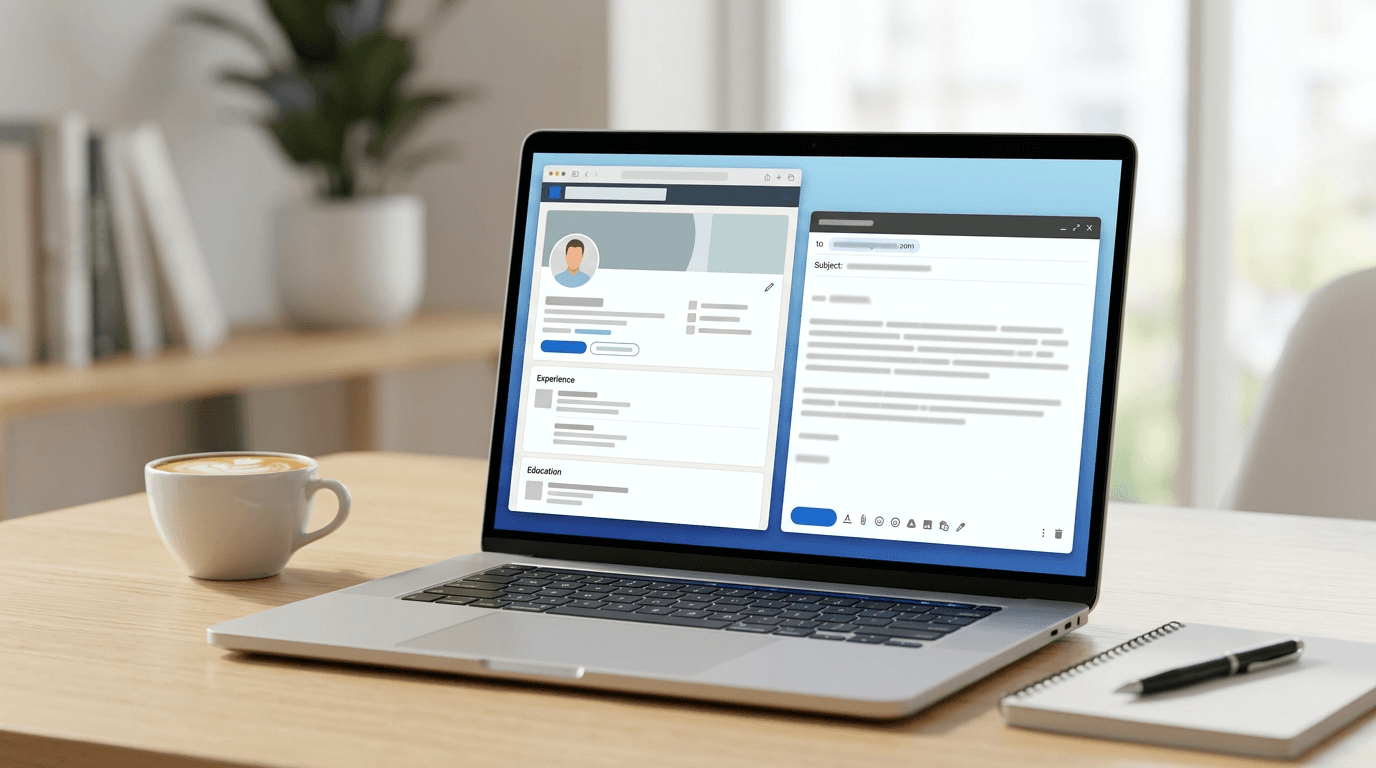
2. Personalized Outreach (Cold Email Optimization) Instead of generic template greetings, the system automatically generates and sends highly targeted messages tailored to the recipient, such as: "Your company's specific technology could solve this exact challenge we are facing."
3. Response Tracking and Analysis The AI analyzes email opens, link clicks, and reply sentiments in real time, scoring the companies with the highest level of interest.
4. Human Focus on Negotiations By freeing team members from tedious tasks like list building and translation, they can dedicate 100% of their time to the highest-value work that only humans can do: sitting down with potential partners to align on technical details.
With about 1,000 South Korean companies already registered on the Rinda platform actively looking for opportunities in the Japanese market, we combine our database of hundreds of millions of global records with AI. What used to take six months of partner-hunting is now being completed in just a few weeks.
An AI overseas sales agent is not just an efficiency tool. Real-world data proves it is becoming a "new infrastructure" for companies to restructure their supply chains and defend against geopolitical risks.
Ride the Wave or Get Swept Away
The 12.5% tariff risk from the US is just the tip of the iceberg.
Global supply chains are currently entering a restructuring phase at an unprecedented pace. We live in an era where cross-border trade routes taken for granted yesterday could be cut off tomorrow.
In this climate, Japan and South Korea—two nations with a deep shared commitment to technology and quality—are drawing closer as partners to complement each other's weaknesses and forge new competitive advantages. This is a highly positive shift that we see clearly in our daily data.
If you feel even a slight sense of unease about your current supply network,
or if you are looking for new partners that traditional methods have failed to uncover,
why not close your Excel spreadsheet for a moment and look across the sea to your closest neighbor?
Behind the facts shown by data, there is always the passion of real people and the seeds of new business. We will continue to deliver these raw, unfiltered insights from the front lines directly to you.
If you have any concerns or challenges regarding your supply chain or finding overseas partners, please let us know in the comments below. We would love to hear your real-world feedback.
To learn more about how to leverage new options for discovering global buyers and suppliers, feel free to contact us through the links below:
Inquire via LINE: https://line.me/R/ti/p/%40590xymny Details for free consultation here: https://www.rinda.ai/ja/contact?utm_source=note&utm_campaign=sns_post
#CrossBorderEC #OverseasSales #ExportBusiness #JapanMarketEntry #ColdEmail #KoreaBusiness #SupplyChain #Manufacturing #Procurement #GlobalExpansion #B2BBusiness #KoreanStartups