How AI GTM Empowers Small Export Teams
If 100 business cards are gathering dust in your drawer after an exhibition, this is for you. With 2–3 people covering Southeast Asia, the Middle East, and Europe, managing everything from prospecting to follow-ups alone is tough. Hiring more staff is rarely an option under tight budgets...
The Era of Solo AI GTM: How Small Export Teams Build Enterprise-Scale Sales Power
Executive Summary (TL;DR) AI-driven sales for small export teams automate three key stages—buyer prospecting, initial outreach, and prioritization—allowing a team of 3 to achieve the coverage of a 30-person team. The core is division of labor: AI handles repetitive research and initial contact, while humans focus on strategic judgment, relationship building, and closing deals. However, in relationship-oriented regions like the Middle East and Southeast Asia, automation without localization can backfire.

The reason AI-driven sales are gaining traction among small export teams is clear. With only 2 to 3 people in the international sales department, you are targeting Southeast Asia, the Middle East, and Europe all at once. A single person is responsible for everything from buyer prospecting to follow-up management. If you have 100 business cards gathering dust in your drawer after an exhibition, this article is for you. "Just hire more people" is a solution that always gets blocked by budget constraints.\n\nTo be honest, AI won't solve all your problems. However, if you properly automate these three stages—buyer prospecting, initial outreach, and prioritization—building a system where 3 people achieve the coverage of 30 is realistically possible. This post is not here to oversell a playbook. Instead, let's look at what actually works and what doesn't.
The Reality of Small Export Teams: 3 People, Buyers in 100 Countries
The Coverage Gap: Even Painful in Numbers
According to the KOTRA 2025 Export Business Survey, the average international sales team in small and medium-sized exporters consists of only 2 to 3 people. On the other hand, filtering for meaningful target prospects in a single category within a global buyer database typically yields hundreds or thousands of companies. An individual representative can manually source and email 10 to 20 buyers a day at best. This structural gap is the starting point that drives SMEs to consider AI for international sales.\n\nThe post-exhibition phase is a classic bottleneck. You meet 300 prospects over three days, but follow-up outreach gets delayed for two months, and by then, the buyer's purchasing cycle has already passed. Within the scope of observations inside the Rinda (GRINDA) platform, we have seen a clear difference in reply rates between companies that follow up within 48 hours of an exhibition and those that do not. However, because this variance is highly dependent on industry, country, and buyer size, it is difficult to generalize with a single metric. To solve this issue, Rinda supports a workflow that automatically generates follow-up email drafts within 48 hours once you upload exhibition business card information.
Between "AI Solves Everything in Export Sales" and "It Must Be Done by Humans"
If you believe that "AI will find all your buyers for you," you will likely be disappointed. On the other hand, if you hold onto the belief that "international sales is purely about human relationships," your competitors might already be reaching those same buyers first through automated pipelines. What this article proposes is somewhere in the middle: a division of labor where AI handles repetitive research and initial contact, while humans focus on judgment, relationships, and closing deals.
Export Sales Automation: "Teams that Add AI" vs. "Teams that Design with AI"

How Can You Diagnose Your Team's Export Sales Automation Level?
GTM (Go-To-Market) refers to the entire strategy of bringing a product or service into a specific market. It consists of buyer prospecting → initial outreach → relationship building → contracting & closing. Most small export teams spend the vast majority of their time in the "buyer prospecting" phase.\n\nA "team that adds AI" simply plugs AI tools into an existing manual process—such as managing buyer lists in Excel while using ChatGPT to draft emails. Conversely, a "team that designs with AI" structures the process from the ground up to be automatable. From buyer data ingestion → automated categorization → personalized email generation → engagement tracking → follow-up prioritization, they intentionally minimize human touchpoints and let the rest flow automatically.\n\nTake a quick moment to check where your team stands:
- We manually manage buyer lists in Excel -> AI-additive
- We write and send cold emails manually one by one -> AI-additive
- Representatives rely on memory or calendars to time follow-up emails -> AI-additive
- Prioritization based on buyer engagement (opens, clicks, replies) is not automated -> AI-additive\n\nIf three or more apply, your priority should be redesigning the process itself, rather than just adding tools.
The 3-Step GTM Playbook for Small Export Team AI Sales
Step 1: Automated Buyer Sourcing Based on HS Codes
An HS Code (Harmonized System Code) is an international standard commodity classification system used for customs clearance. By using this code as a starting point, you can reverse-engineer trade data to find countries and companies importing specific goods.\n\nThe execution is simple. First, search for import countries and volume trends based on your HS Code using ITC Trade Map or local customs databases. Focus on countries with growing import volumes. Next, narrow down the specific companies importing those products in the target country using trade data. Finally, use AI for company profiling—organizing size, buying patterns, and supplier diversification status to complete your initial target list. This significantly reduces the time spent on repetitive manual research. Rinda (GRINDA) connects this Step 1 workflow, from HS Code input to automatic generation of prospective buyer lists, into a single fluid process, enabling export managers to spend more time making strategic decisions rather than doing tedious research.
Step 2: Cold Email Automation for Exports—Localization is Non-Negotiable
Cold email automation involves using AI to draft and personalize the initial outreach emails based on buyer information, sent to prospects with whom you have no prior relationship. While many teams already use this approach, there is a critical pitfall easily overlooked.\n\nIn the Middle East, Asia, and Latin America, this direct approach often falls flat. In relationship-driven cultures, LinkedIn messages or introductions through local connections are far more effective than a cold email, and generic automated emails can actually erode trust. Many teams face disappointment when they copy-paste Western B2B playbooks into these regions. Even when automating outreach, the localization work to align with local language and cultural context requires a human touch.
Step 3: Follow-Up and Feedback Loops—What AI Can't Do
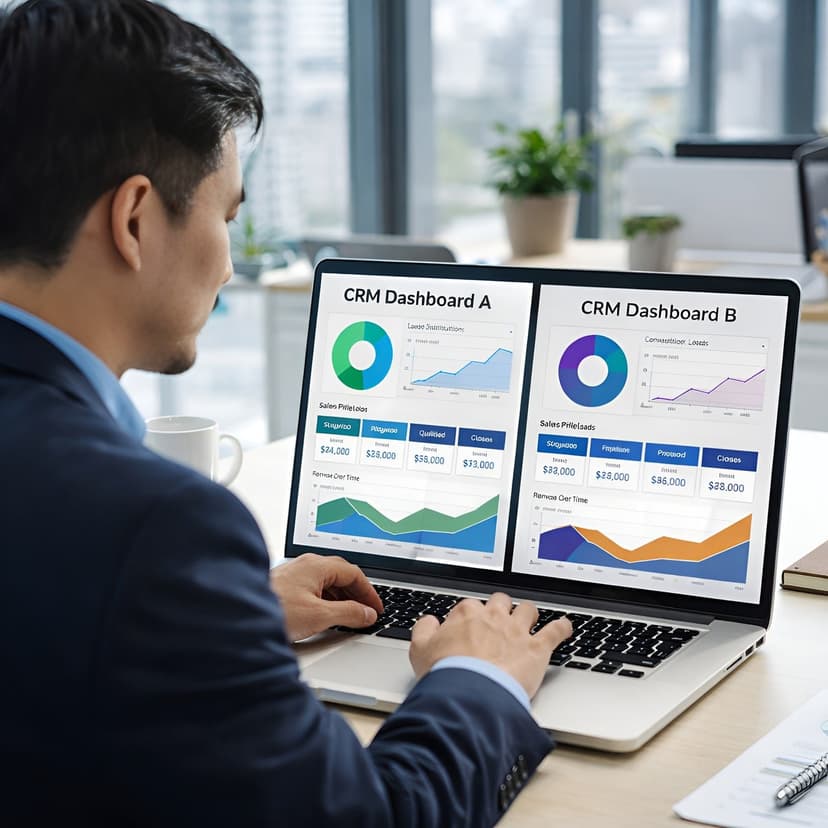
AI is excellent at automatically tracking email opens, clicks, and replies, and segmenting prospects based on engagement. However, the next step remains uniquely human: interpreting the context of a buyer's interest and delivering the right proposal at the exact right moment. The success of AI-driven sales for small export teams lies in overlaying human judgment on top of automated data flows.
Frequently Asked Questions (FAQ)
Q. How should a small export team get started with AI sales automation?
A. The best place to start is the "buyer prospecting" stage. Build a workflow that automatically filters target import countries and buyers based on HS Codes first. Process design must come before choosing tools. If you currently treat Excel management and ChatGPT drafting as separate, disconnected tasks, your next goal should be linking these two stages into a single automated pipeline.
Q. Is cold email automation effective for exporting to Middle Eastern or Southeast Asian markets?
A. In relationship-driven business cultures, high-volume automated emails tend to perform significantly worse than in Western markets. While you don't need to abandon automation entirely, localization that reflects the local language and cultural context must be reviewed by a human. A more realistic approach is to initiate first contact via LinkedIn or local partner introductions, then apply automation to subsequent follow-up stages.
Q. Does implementing export sales automation reduce the role of sales representatives?
A. Quite the opposite. When automation takes care of repetitive research and initial cold outreach, representatives can spend far more time building relationships and closing deals that require strategic judgment. The goal of AI-driven sales for small teams is not to replace humans, but to establish a division of labor that lets them focus on what they do best.
Rinda (GRINDA) is a buyer prospecting and outreach automation platform built specifically for small export teams. From HS Code-based potential buyer searches to personalized cold emails and follow-up prioritization—we highly recommend starting for free today. → Get Started with Rinda for Free"
Sources
Related resources
You don't have to figure export out alone
From finding buyers to closing deals, Rinda is with you. Book a free 30-minute chat to see how we can help.