How to Write a Winning Export Voucher Business Plan: Key Insights from Evaluators
We’ve broken down the common features of business plans that pass the 4,000-company competition, the three points evaluators actually look for (market evidence, 12-month roadmap, and performance metrics), and how to realistically hit your KPIs.

2026 Export Vouchers: Why Your Business Plan Decides Between Success and Competition with 4,000 Others
Rinda AI Exports Strategy Team | March 10, 2025
"I submitted all the documents, but I don't know why I was rejected."
This is the most common feedback we hear during the export voucher application season. Companies submit their business registration, financial statements, and everything else required—only to face rejection.
The point most companies miss is that winning an export voucher isn't just about filing paperwork; it’s decided by the strength of your business plan.

You can't change your quantitative score. The battle is won on qualitative factors.
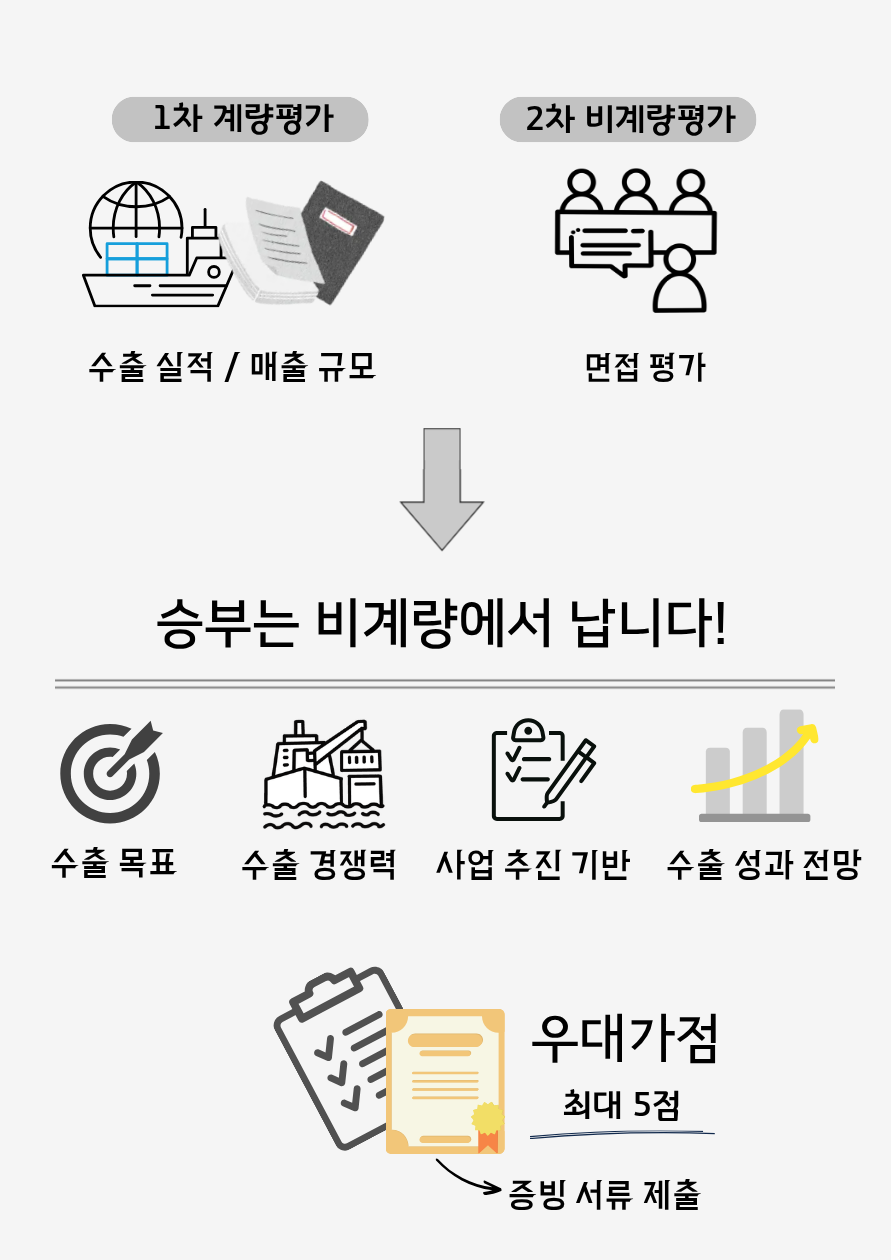
Initial quantitative evaluations automatically pull export performance and revenue data from Korea Customs Service records. This is independent of your business plan.
In reality, most competing companies have similar quantitative scores. The final decision is made during the second phase: qualitative evaluation. Evaluators assess four key areas: clarity of export goals, export competitiveness, execution foundation, and performance outlook.
All four must be clearly captured in your business plan. Remember, preferential points (up to 5 points) must be selected during the application and supported by specific documentation.

"Why exports?" — You must answer this question with numbers
The first thing evaluators look for is the necessity of exports. Many companies fall into the trap of using vague descriptions like, "We need to expand because the Southeast Asian market is growing."
What makes a difference is concrete market data. Facts like target market growth rates, your product's price competitiveness, and a history of previous international inquiries or sample requests serve as your foundation.
For example, phrasing it as "18% annual growth in the Vietnamese functional cosmetics market, documented requests from 3 local distributors, and a 20% raw material cost advantage over competitors" is far more effective. The need for exports should be written from the perspective of market evidence, not internal company desire.
"How will you execute it?" — The 12-month roadmap is the answer
Vague plans like "We will utilize various services" are actually a reason for point deductions.
What the evaluators want to see is a 12-month execution timeline. Every stage should be mapped to specific KPI targets—for example, finding 500 prospects in Q1, sending 3,000 cold emails in Q2, and securing 20 in-person meetings at trade shows in Q3.
The more specific this flow, the more consistent and confident your answers will be during the follow-up interview.

A plan that looks ahead to settlement is a winning plan
The final thing evaluators check is measurability. If your voucher balance exceeds 15% unused, you may face penalties in future participation for the next two years.
Specifying "how you will measure performance" starting from the business plan stage is a strength. If your plan includes tracking email open rates, response rates, and meeting conversion rates via a dashboard, evaluators will trust that your company can successfully execute and report on the project.
Ultimately, your business plan must demonstrate three things: market evidence, a 12-month execution roadmap, and a performance measurement structure. When these three align, you build a compelling case.

"I want to put KPIs in my plan, but how should I set the numbers?"
With only 1 or 2 staff members managing overseas sales, hitting significant numbers within 12 months is challenging. One way to solve this is through AI-driven overseas sales automation.
As an export voucher service provider, Rinda automatically filters targets from a database of 85,000 buyers in 150 countries and manages everything from sequence email outreach to meeting scheduling. Since every step is recorded in real-time, you can realistically hit the KPIs set in your business plan and use those exact metrics for your settlement reports.
By utilizing the 'Buyer Prospecting' and 'Overseas Sales/Marketing' menus, you can build an AI-powered sales system using government subsidies without additional internal budget.
For the 2026 Export Voucher, you can implement AI-driven overseas sales automation with Rinda AI using your voucher budget.
👉 Request a free voucher consultation → https://rinda.ai/data-voucher/?utm_source=naver&utm_medium=organic&utm_campaign=blog