
US Funding Crisis Reshapes Tech Talent Map
A warning letter from the MIT President highlights a growing crisis in US research funding. As shifts in NSF, NIH, and DOE budgets disrupt talent pipelines in AI, semiconductors, and biotech, countries like South Korea, Europe, and China are seizing the void. We analyze how your export strategy should respond to this shifting axis of global technology power.
US Research Funding Crisis: The Global Shift in Tech Talent Landscaping
TL;DR As US research funding cuts accelerate in 2025, the budgets of key federal agencies like the NIH and NSF are faltering, accelerating the global migration of technical talent. As talent pipelines disperse to Europe, Canada, and Singapore, the landscape of R&D investment is shifting in tandem, providing direct implications for South Korean exporters' overseas R&D collaborations and their 2025 export strategies.
The Day the MIT President Wrote an Open Letter — A Warning Sign from the US Research System
In the spring of 2025, as US research funding cuts took hold, MIT President Sally Kornbluth issued an unusual open letter. If you are responsible for overseas markets, you likely have an intuitive grasp of this: when technical talent supply chains are disrupted, the industrial ecosystem is the first to suffer. Far from a simple plea for budget restoration, she explicitly stated that "federal cuts to indirect costs threaten MIT's very research capabilities," asserting that universities must maintain an independent voice against government pressure. This letter marks a singular, symbolic development: a growing fracture in the long-standing trust between US higher education and the federal government.

What made this letter garner such attention was that it wasn't just MIT's perspective. Concurrently, top research universities including Johns Hopkins, Stanford, and Caltech expressed similar concerns through official statements or internal reports. According to reports from Nature and Science, this trend aligns with the Trump 2nd term administration’s approach to restructuring federal research agency budgets. This collective shift—where universities are moving from "government dependence" to "independent judgment"—is far from a one-semester issue.
The Reality of the Cuts — The Scale of the NIH Budget Crisis and Federal Funding
Numbers Define the Crisis
According to reporting from Nature and Science (as of 2025), the US National Institutes of Health (NIH) announced a plan to cap indirect cost rates for university research at 15%, though it faced a temporary court-ordered stay. The National Science Foundation (NSF) has also reported numerous cases of frozen new grant issuances or significant review delays in 2025. Furthermore, Science magazine has reported that the Department of Energy’s Office of Science is facing active discussions on budget cuts during the appropriations process.
While the exact total of the cuts remains fluid due to many pending items, the NIH accounts for a significant portion of total US university research funding—it is the single largest federal source of university research support according to the National Center for Science and Engineering Statistics (NCSES). Consequently, even a single administrative cap on indirect costs carries a massive ripple effect.

It’s Not Just MIT
Johns Hopkins University, for instance, is highly dependent on federal research funding, particularly from the NIH, making it highly vulnerable to these reductions. Indirect reports suggest rising concerns at Stanford and Caltech, where prolonged freezes in NSF and DOE budgets are forcing difficult decisions regarding new PhD admissions and postdoctoral hiring. The Association of American Universities (AAU) has also officially expressed its concern over the stifling of federal research investment. This is no longer an isolated institutional struggle; it is a systemic crisis.
How Research Funding Cuts Trigger Global Talent Migration
Budget Cuts → Lab Downsizing → Fewer PhD/Postdoc Opportunities
In the US graduate system, PhD candidates and postdocs are directly tethered to federal grants. When a principal investigator (PI) receives an NSF or NIH grant, the funding provides the researcher’s stipend and salary. According to the NCSES Science and Engineering Workforce Data, a significant portion of US-based STEM research talent comes from laboratories backed by federal funding. If funding drops, PIs struggle to open new labs, and existing labs are forced to shrink. The result is a structural contraction in the supply of top-tier talent in AI, semiconductors, and biotech.
A country’s technological prowess is derived from its talent pipeline. The AI research capabilities of US Big Tech, the design prowess of semiconductor fabless firms, and the drug-development speed of biotechs all depend on talent bred in university labs. If the base of the supply chain shakes, the technological landscape will look vastly different in a decade. This is exactly why export professionals should pay close attention today.
Companies Are Already Adapting to the Global Movement
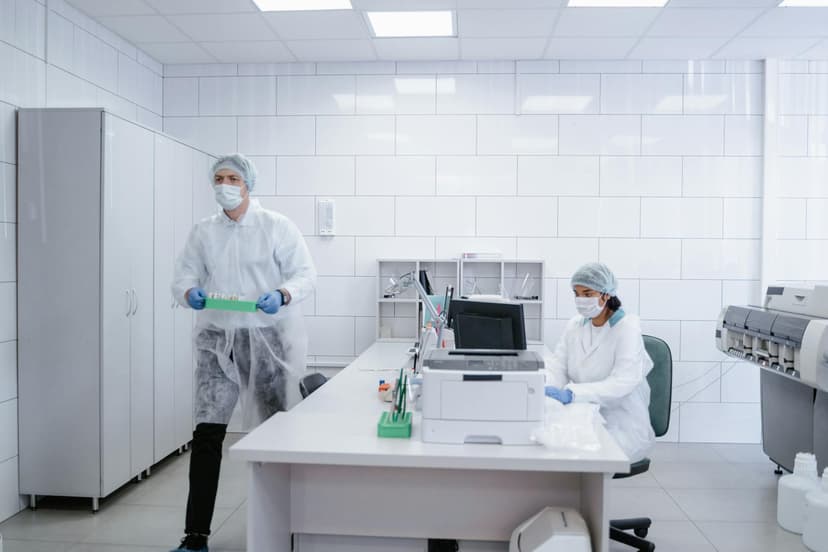
Even in the short-term hiring market, changes are evident. Some Big Tech firms are shifting away from centralizing research roles in US campuses, instead diversifying their R&D hubs to cities like Toronto, Vancouver, London, Singapore, and Paris. This trend is inseparable from the growing instability of the US research environment. When the talent pool disperses, R&D investment invariably follows.
Filling the Void — The Competition for R&D Collaboration and Talent
The Race for Positioning Has Begun
The European Research Council (ERC) has maintained a budget expansion trend in recent years, executing approximately €95 billion in research investment under the 2021–2027 Horizon Europe framework (ERC Official Site). As the US research environment destabilizes, the relative appeal of ERC grants naturally rises. South Korea’s Institute for Basic Science (IBS) is also actively operating programs to attract elite international researchers, and the Ministry of Science and ICT continues to expand its global R&D cooperation and talent-import programs (IBS Official Site). Meanwhile, reports suggest China is continuing to lure overseas-based researchers back through policies succeeding its "Thousand Talents" program. All three regions are identifying the current confusion in the US research sector as a key opportunity.

What Does This Mean for Korean Companies?
The diversification of the talent landscape means concrete new opportunities for domestic R&D-based firms, including semiconductor, biotech, and AI startups. When PhD graduates from top US schools return home or relocate to European or Asian research hubs, the points of collaboration with the domestic industry broaden. For exporters, this fundamentally changes the topography of "finding technical partners." KOTRA supports partnerships with overseas R&D clusters and labs through its overseas technical cooperation programs (KOTRA Official Site). Be sure to check the latest annual notices, as requirements and limits change yearly.
Incorporating Talent Migration into Your 2025 Export Strategy
Where Talent Moves, New Tech Hubs Emerge
Toronto and Vancouver have already established themselves as alternative AI hubs in North America. London and Paris are experiencing rapid growth in their deep-tech and biotech startup ecosystems, while Singapore is absorbing massive investment from global companies as a premier Southeast Asian R&D hub. The concentration of top-tier talent in these regions suggests the formation of a new group of companies with significant purchasing power and technical demand. It is worth monitoring the trends of emerging firms in these hubs from the perspective of your 2025 export strategy.
3-Step Checklist to Leverage Talent Shifts for Market Entry
① Identify Target Tech Hubs
- Monitor quarterly where the main research clusters for your relevant tech fields (AI, semiconductors, biotech) are concentrating.
- Reference: Startup Genome Global Ecosystem Reports and KOTRA’s country-specific tech industry reports.
② Assess Potential for R&D Partnerships
- Check if there are established collaboration entry points with local university labs, tech startups, or public R&D institutions.
- Verify eligibility for KOTRA’s overseas technical cooperation support programs annually.
③ Update Your Buyer List
- Expand your buyer list beyond the US-centric model to include these new tech hubs in Europe, Canada, and Singapore.
- Regularly monitor reports (Nature, Science, TechCrunch) on talent migration to quickly identify newly emerging institutions and firms.
He Who Sees the Opportunity in the Crisis Wins the Next Decade
US Research Funding Cuts Are a Structural Signal, Not a Short-term Headline
The crisis in US research funding is unlikely to remain restricted to the term of a single administration. The repositioning of the university-government relationship, the diversification of research resources to the private and international sectors, and the resulting migration of the talent pipeline—these are deep, structural shifts that will take significant time to reverse. The MIT President's letter was merely the first official siren; subsequent events are only reinforcing this reality.
For your team, the first essential question is deceptively simple: "Is the region where we are seeking buyers today still going to be a center of the same technological capability five years from now?" To answer this, you must integrate shifts in talent landscape into your market analysis. As the axis of technological dominance shifts, it is prime time to recalibrate your market entry strategy.
By · RINDA Export Research Team (Editors specializing in international buyer outreach and automated export sales)
We translate data from the buyer acquisition pipelines of over 200 South Korean exporters and internal observations within the Rinda platform into actionable strategies and checklists for export practitioners.
The shifting landscape of global technical talent ultimately comes down to which companies can identify the right partners in the right regions first. If you want to reflect these changes in your export strategy, we recommend exploring RINDA, which leverages AI to identify overseas buyers and automate cold outreach. You can automate the manual, repetitive processes involved in building a database of leads in new tech hubs and making first contact. Integrating Grinda's export automation services can help you build an infrastructure more responsive to volatile market changes.
Q&A
Q. Is the US research funding cut directly relevant to Korean exporters?
A. There may not be an immediate, direct impact. However, if your major buyers are US Big Tech, biotech, or semiconductor firms, you need to watch where those companies are shifting their R&D investments. Purchasing power tends to follow where technical talent aggregates. We recommend using this as a signal for when to diversify your buyer outreach beyond a US-only focus.
Q. How do programs like Europe’s ERC or Korea’s IBS actually create opportunities for exporters?
A. Rather than direct buyer generation, they function as gateways for R&D partnerships. For instance, if a PhD researcher who moved from the US joins a domestic university or the IBS, their network can serve as a conduit for collaboration with overseas institutions. For firms in materials, components, and equipment, this is a seed for finding technical partners.
Q. Which resources should I monitor to track global talent migration?
A. The policy and funding sections of Nature and Science, the NCSES (National Center for Science and Engineering Statistics) annual reports, Startup Genome’s global ecosystems reports, and KOTRA’s country-by-country R&D trend notes are practical starting points. Setting a routine to scan these sources once a quarter will ensure you don't miss the major shifts.
Sources
Want export insights in your inbox?
We'll send one email summarizing new posts from our blog and resource library.