
While the US Claims AI Supremacy, It is Unplugging the Talent Factory
When the MIT President had to issue a public warning, we knew it was significant. We structurally analyze how US federal R&D funding cuts are tightening the AI talent pipeline. Explore the shift in the global talent landscape caused by the contradiction between 'tech hegemony' and 'reduced public research investment,' and practical signals for Korean AI startups to capture.

While the US Claims AI Supremacy, It is Unplugging the Talent Factory
TL;DR / Key Summary As US AI research funding cuts accelerate, combining with NSF/NIH budget reductions and visa uncertainty, the global AI talent flow is rapidly shifting. Canada and Europe are strategically targeting this void, signaling an opening for Korean AI startups to recruit high-end overseas talent and diversify technical collaborations.
In 2025, as US AI research funding cuts accelerate, the nation that has declared its ambition for AI supremacy is effectively unplugging the factory that produces AI researchers. Does that sound strange? The day the MIT President had to issue a public letter, our team sensed that this was more than a mere budget dispute. This contradiction in the US is quietly, yet rapidly, reshaping the entire landscape of global AI talent mobility.

The Day the President of the World’s Top AI University Had to Issue an 'Urgent Warning'
What Did the MIT President's Open Letter Warn About?
In 2025, MIT President Sally Kornbluth issued an open letter directly warning of the dangers that federal university research funding cuts pose to US scientific and technological capacity. The core message was simple: "Without federal research support, we cannot raise the next generation of researchers, and that void will be filled by competing nations." It is highly unusual for an institution like MIT to publish such a document. University presidents rarely challenge government policy so openly.
Why Now, and Why MIT?
It is not just because the budget was cut. It is a signal that the public-university research collaboration model, which has supported US technological competitiveness for decades, has begun to falter. The structure of this model is clear:
- The federal government invests in basic research
- Universities cultivate talent
- The industry absorbs that talent and technology
If MIT is in a position where it must issue a warning, it is highly likely that lesser-known, mid-tier universities are already collapsing much more quietly and rapidly.
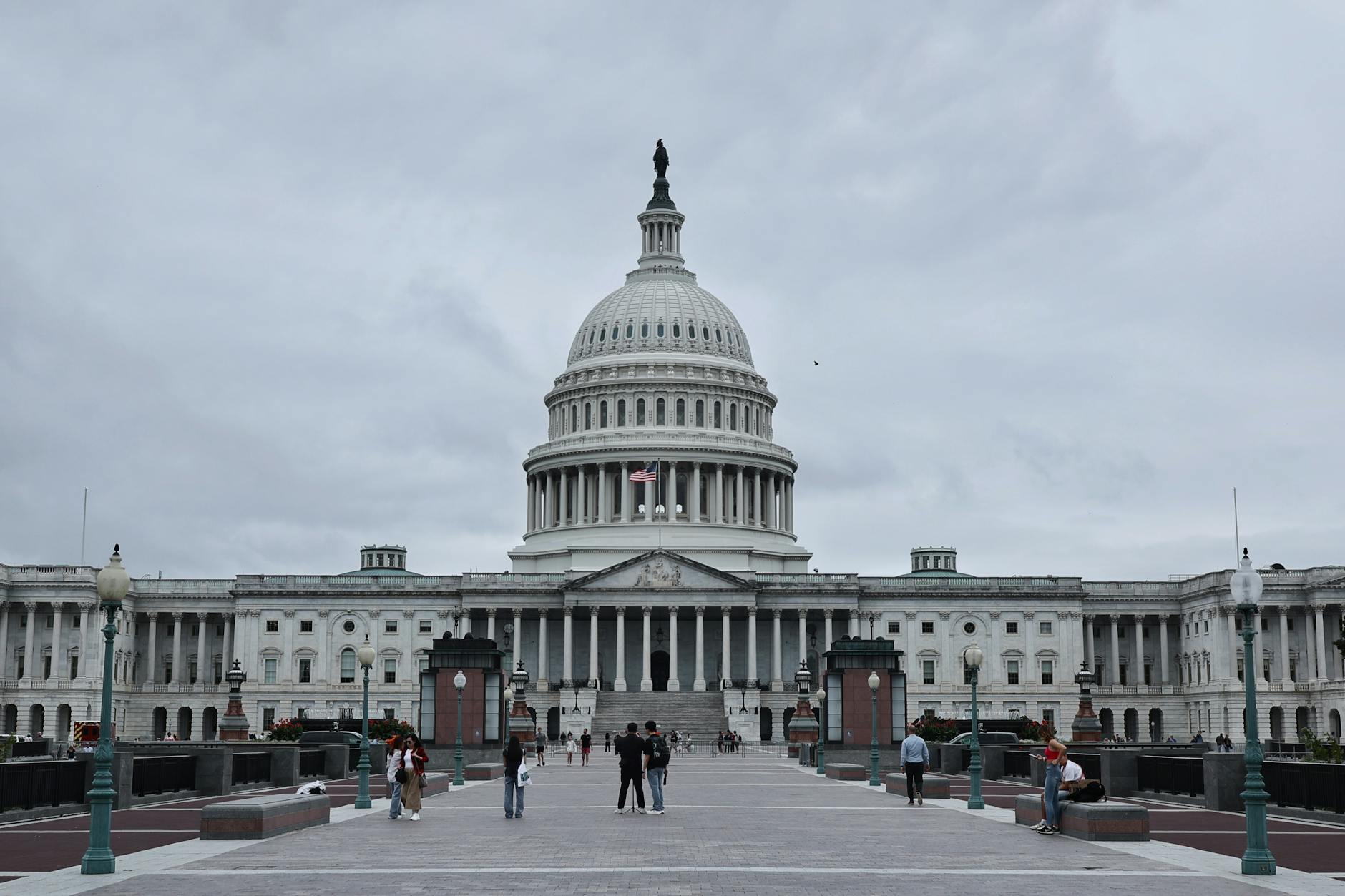
Just How Serious Are the US AI Research Funding Cuts?
What Is the Direct Impact of NSF/NIH Budget Cuts on AI and Semiconductor Research?
The National Science Foundation (NSF) and the National Institutes of Health (NIH) are the lifeblood of basic research at US universities. Since the start of the second Trump administration, both agencies have faced pressure to cut budgets, and multiple US media outlets reported that significant cuts were proposed in the 2025 budget for the NSF. While final figures depend on congressional deliberation, we will not speculate on unconfirmed numbers.
What matters is the direction. AI, semiconductors, and biotech are areas highly dependent on NSF grants, and according to NSF statistics, the federal government is a primary source of basic research funding for computer and information science at universities.
The Silent Collapse of Mid-Tier Research Universities: The Invisible Damage
Top-tier institutions like MIT, Stanford, and Caltech have significant endowments and revenue from industry collaborations, providing some buffer against funding cuts. However, mid-tier public universities that rely heavily on federal grants are different:
- Alternative resources are limited
- Faculty recruitment, graduate student support, and lab operations are directly tied to federal funding
Damage to these institutions often goes unreported by the media, but remember that a substantial portion of the AI researcher pipeline emerges from these very mid-tier universities.
What Happens When the AI Talent Pipeline Is Blocked?
Doctoral Candidates and Postdocs Leave First
When federal funding decreases, Research Assistant (RA) positions are the first to be hit. Without RA positions, new doctoral student intake shrinks, and postdoc roles vanish. This is not a short-term labor issue. If the number of individuals entering doctoral programs declines today, the number of top-tier talent entering the AI research field in 5–7 years will decrease proportionally. The blocking of the pipeline always has a delayed effect. Unplugging the factory today may show no immediate impact, but the consequences arrive years later.
The Dual Pressure of Visa Uncertainty and Funding Cuts: A Complex Effect Accelerating Global AI Talent Mobility
Visa policies intersect here as well. The second Trump administration is strengthening immigration and visa policies, including stricter H-1B reviews and reduced certainty for OPT (Optional Practical Training) extensions. According to statistics from the Institute of International Education (IIE), more than half of the students in US STEM doctoral programs are international. This means a significant portion of US AI research capability is sustained by foreign researchers. If funding shrinks, RA positions disappear, and visas become unstable, they have no choice but to choose places other than the US. It is effectively pushing away the very people who create the 'technological supremacy' the US claims to pursue.

Global AI Talent Landscape Changes Caused by US Fractures
Why Canada, Europe, and South Korea Are Seeking Secondary Benefits
Historically, when one nation's research ecosystem shrinks, alternative hubs emerge. Currently, Canada is actively investing in AI research infrastructure and talent attraction through the Pan-Canadian AI Strategy, and the EU is expanding global researcher recruitment routes via the Horizon Europe program. Canada and Europe have already released messages actively targeting AI researchers leaving the US environment. This is no coincidence; it is a strategic move to quickly fill the void created by US AI research funding cuts.
'Silent Mobility': The Signal Korean AI Startups Must Catch
For Korean AI startups, this flow reads as two signals. First, uncertainty has increased for joint R&D collaborations underway or planned with US universities. If the funding situation at a partner institution changes, research schedules or staffing composition can fluctuate. Second, a window is gradually opening to recruit AI researchers who are leaving or preparing to leave the US research environment. The moment global AI talent mobility accelerates is the moment a Korean startup can, for the first time, become a viable option for talent that might otherwise be unreachable.

Practical Checklist for Korean AI Startup Global Strategy
Diversifying Technical Collaboration Routes: 3 Things to Check Now
Check your US university partnership agreements for any 'funding uncertainty clauses.' If joint research is operated based on federal grants, you need to re-examine the contract conditions regarding what happens to the project if grants are cut.
- Check 'Federal Funding Dependency Clauses' in US University Partnership Agreements — Determine in advance how NSF/NIH budget cuts will affect joint research schedules.
- Scan for Partnerships with Canadian/European Research Institutions — Routes like KAIST Global Cooperation or the European Laboratory for Learning and Intelligent Systems (ELLIS) are already active outside the US.
- Quantify Your Tech Collaboration's Dependence on the US — Many teams do not know this figure accurately. You need numerical data to build a strategy.
AI Talent Recruitment Strategy: Why Now Is the Time for Overseas Talent
Finding AI researchers looking to change jobs or start something new after leaving the US research environment is more specific than you think.
- LinkedIn Filtering: Focus on profiles of doctoral candidates and postdocs at top 20 US AI labs who have shown reduced activity or 'open to work' signals in the last 1–2 years.
- Track Conference Authors: Researchers among authors of papers at major AI conferences (NeurIPS, ICML, ICLR) who have recently changed or are changing affiliations are also good signals.
- Networking First: For AI talent recruitment, hiring is often more about long lead times and relationship building than standard recruitment. Even if there is no immediate position, starting now is advantageous.
In a time when the research ecosystem is unstable due to US AI research funding cuts, Korean startups can be captured on the radar for the first time as an 'interesting choice.' It is a window that only opens when the timing is right.
To Retain Supremacy, Don't Close the Factory
Where Does the Contradiction End?
'AI supremacy' and 'reduced public research investment' are structurally difficult to coexist. Without basic research, there is no application, and without application, there is no industrialization. Whether the MIT President's open warning will trigger real policy change or remain a symbolic protest remains unknown. However, what we can confirm in 2025 is this: structural stress in the US AI research ecosystem has risen, and its impact has already begun to manifest in the form of reshaped global AI talent mobility.
Why Rinda Is Paying Attention to This Trend
Our team creates AI-powered export sales automation tools. Yet, shifts in global AI talent mobility directly impact our clients—Korean companies exploring overseas markets. Collaboration partners change, recruit-able talent pools evolve, and the competitive environment itself is being restructured. If you want to think together about what strategies to build on this trend, we encourage you to start a casual conversation at any time.

Author · RINDA Export Sales Research Team (Editor for Overseas Buyer Discovery & Export Sales Automation Research)
Based on internal RINDA platform observations and data from 200+ Korean exporters' buyer discovery pipelines, we edit strategies and checklists for immediate use in export operations.
If you want to think about how the US-led AI talent landscape shift will affect your team's tech collaboration or hiring plans, contact the Grinda.ai team for a light chat. Those interested in overseas buyer discovery and export sales automation can also check out RINDA. Free consultation requests are always open.
Q&A
Q. Do US AI research funding cuts directly impact joint research between Korean startups and US universities?
A. There can be a direct impact. Specifically, if a US professor’s lab is operated by federal grants, NSF/NIH budget cuts or grant suspensions can affect the composition and schedule of joint research personnel. We recommend checking your existing or planned contracts for 'federal funding dependency clauses' first.
Q. Where and how should we approach recruiting AI researchers leaving the US?
A. Searching LinkedIn for profiles of PhDs and postdocs at top US AI research institutions who show recent affiliation changes is a practical starting point. Also, leverage databases of authors who have published in major conferences like NeurIPS, ICML, and ICLR. Keep in mind that recruitment in AI talent strategy usually requires long-term relationship building before a position is even open. Starting networking early is advantageous.
Q. How do we start collaborating with research institutions in Canada or Europe?
A. The EU’s Horizon Europe program has cooperation frameworks that allow participation from Korean institutions under certain conditions. It is also worth considering routes through Korean research institutions like KAIST or POSTECH, which have already established European/Canadian networks. Expanding beyond the US and diversifying cooperation channels is an important strategic step for Korean AI startups. We recommend checking specific qualification requirements directly on the official Horizon Europe website.