
A $835,000 Settlement for One Meme? Global Marketing Risks and AI Solutions
Based on a shocking case in the US involving a 37-day detention over a meme and an $835,000 settlement, we examine the legal risks global exporters face and digital compliance strategies powered by AI.

TL;DR
- In global marketing, a single carelessly shared image or meme can ruin brand reputation and trigger astronomical legal disputes.
- Exporters must establish a robust digital compliance framework that considers local laws and cultural nuances to avoid judicial risks.
- Implementing Grinda AI's multimodal AI content verification solution allows businesses to seamlessly filter out legal and cultural risks in multilingual marketing assets before distribution.
An $835,000 Settlement for One Meme? Global Marketing Risks and AI Solutions
Recently, an increasing number of companies expanding globally are facing costly lawsuits due to critical global marketing risks triggered by a single, carelessly shared image. What if a simple joke meme posted on social media led to your arrest by armed police in the US? An almost unimaginable scenario—being detained in a cold jail cell for 37 days—actually happened (according to 2023 Tennessee court records). Sharing an image "just for laughs" only to have it clash with local laws, damage brand reputation, and escalate into a massive international marketing lawsuit is more common in global markets than one might think. The recent high-profile $835,000 US settlement case serves as a loud wake-up call for marketers and exporters operating globally. The moment you step into international markets, humor that was consumed harmlessly at home can turn into a critical threat.

How It Began: A Single Parody Image Triggers an Arrest Warrant
The incident began with a social media post by a man living in Tennessee, USA. He posted a parody meme lampooning former President Donald Trump and local law enforcement on his personal account. To an outsider, it might have looked like a slightly edgy political satire or a harmless joke. However, the local police's reaction was surprisingly severe. Law enforcement immediately issued an arrest warrant, claiming the image "threatened public safety, spread false information, and obstructed justice." A lighthearted joke instantly morphed into a serious criminal charge.
The Alleged Charges and the Reality of the Detention
Police dispatched armed officers to the man's home, and he was handcuffed without fully understanding why. The primary justification cited by law enforcement was "making terroristic threats and disseminating false alarms." Even more shocking is that he was detained in jail for a staggering 37 days before ever facing a formal trial. Failing to meet digital compliance standards on a mobile screen resulted in a complete loss of physical freedom in the real world. This is a prime example of how quickly and severely an online incident can translate into physical real-world consequences.
US Federal Court Ruling Exposes the Reality of International Lawsuit Risks
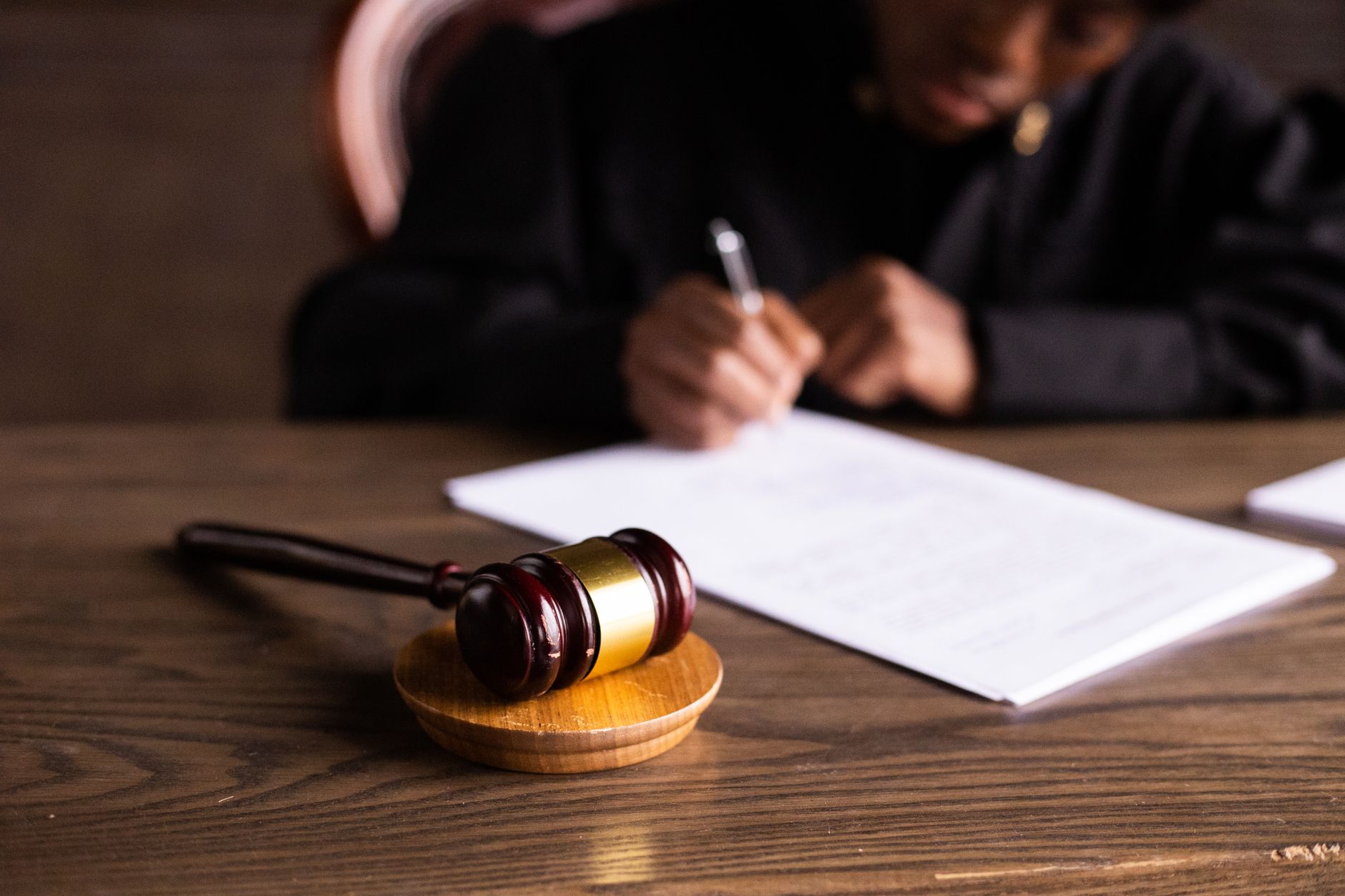
After enduring the wrongful detention, the man immediately filed a lawsuit for damages against law enforcement. The core of this fierce battle, which went all the way to the US Federal Court, was whether his First Amendment right to free speech had been violated. Ultimately, the court ruled in favor of the man. The court determined that even if a meme discomforts law enforcement, satire and parody fall under constitutionally protected speech (US Federal Court Ruling, 2023). With this ruling, he successfully secured a historic settlement of $835,000. However, from a corporate perspective, an international marketing lawsuit of this nature can inflict permanent damage on brand image and rack up astronomical legal expenses.
The Shield of Qualified Immunity and the Steep Legal Hurdles Faced by Individuals
Yet, viewing this solely as a "happy ending" overlooks the incredibly high barriers in reality. In the US legal system, public officials are heavily shielded by "qualified immunity" against liability for mistakes made during their duties. For an individual, piercing this shield and winning a case against state authority is exceptionally difficult. It requires enduring years of legal battle and astronomical attorney fees. The shattered daily life and psychological trauma from 37 days of wrongful detention can hardly be compensated by $835,000. Ultimately, this leads to the conclusion that rather than seeking post-incident remedies after getting embroiled in a lawsuit, proactive prevention to block such disputes entirely is the best approach.

Digital Compliance Challenges Facing Exporters
Exporters often overlook these judicial risks when expanding abroad. This becomes even clearer when looking at success stories in the K-beauty market. Brands like ANUA (No. 1 Heartleaf Toner on Amazon), Beauty of Joseon, and d'Alba, featured on the RINDA Beauty Industry Page, secured dominant positions through rigorous localized marketing (2024 KOTRA Beauty Export Report). Behind their success lie meticulous digital compliance efforts that precisely align with local laws and cultural contexts. If a carelessly used image or copy accidentally touches upon local religious, political, or racial taboos, it can instantly lead to brand boycotts and astronomical damage lawsuits.
Indeed, global marketing risks go far beyond simple copyright infringement. In regions with strong religious and cultural identities, such as Southeast Asia or the Middle East, even subtle nuances in a single phrase can trigger distributor complaints or customs sanctions (2023 KITA Trade Report). Distributing multilingual marketing content without precise prior verification, amidst volatile exchange rates and changing local policies, poses an existential risk to businesses.
Proactive Risk Management with Grinda AI's Multimodal AI Technology
The Grinda AI team has developed advanced AI technology to proactively prevent these legal and cultural risks. Traditional text filtering methods struggle to catch political mockery or multi-layered meanings hidden within images and memes. To solve this, Grinda AI implemented a multimodal AI model that analyzes images and text simultaneously to comprehend the overall context.

For exporters operating multiple foreign-language channels, maintaining global SEO authority while ensuring safety is a top priority. Grinda AI's content verification solution goes beyond merely filtering out blacklisted words. It simulates potential legal risks based on US First Amendment case law. By leveraging real-time legal databases from various countries, it transparently displays the litigation probability of your marketing assets as risk grades. As a result, it fosters a stable business environment and securely protects corporate digital assets.
A 3-Step "Risk-Free" Checklist for Global Content Distribution
Here is a 3-step global marketing compliance checklist that export practitioners and decision-makers can apply to their workflow immediately. Use it to audit your distribution process.
Step 1: Screen Against Local Laws and Platform Community Guidelines Compare your assets against the target country's defamation scope and copyright guidelines for platforms like Instagram and TikTok. Even light parodies are highly unlikely to qualify for Fair Use when used by commercial accounts.
Step 2: Perform AI-Powered Multimodal Sensitivity Filtering Run your images and copy through an AI analyzer before distribution. This measures objective threat levels for cross-cultural misunderstandings or political sensitivities, catching local slang or hidden symbols that human reviewers might miss.
Step 3: Final Legal Review by Localization Agents and Experts Using the initial risk screening from the AI, have local partners or professional compliance agents verify the content. Perfect "risk-free" distribution is achieved when technological precision meets human intuition.
Written by · RINDA Export Sales Research Team (Global Buyer Discovery & Export Sales Automation Research Editors)
Based on global buyer discovery pipeline data from 200+ Korean exporters and internal insights from the RINDA platform, we compile practical strategies and checklists ready for export operations.
The success of global business depends on how safely and widely you can deliver engaging content. Build a proactive defense system to ensure your upcoming global campaign isn't blocked by invisible local barriers. If you need practical solutions to lower outbound barriers and discover global buyers, explore the RINDA platform. Furthermore, if you want to maximize your multilingual content safety and export automation synergy, take a look at Grinda's AI-driven pipeline for a practical solution.
Q&A: Frequently Asked Questions on Global Marketing Risks and Digital Compliance
Q1. How does legal liability differ when a meme is used on a corporate brand account rather than a personal account, as in the US settlement case?
A1. Because corporate accounts pursue commercial gain, the scope of protection for free speech under the First Amendment is far narrower than for individuals. Unauthorized use of memes featuring third-party copyrighted material or likenesses in marketing can instantly trigger international marketing lawsuits for right of publicity violations or false advertising. Settlements and damages are also scaled according to the company's asset size, meaning they are significantly higher, requiring extreme caution.
Q2. What specific technical process does Grinda AI's AI content verification solution use to prevent global marketing risks?
A2. The Grinda AI solution goes beyond simple translation and text matching. It leverages multimodal AI to comprehensively analyze metaphors, visual compositions, and regional cultural taboos within images. Utilizing real-time crawling technology, it factors in the latest legal amendments and litigation trends of the target country to deliver intuitive, visual risk scores for marketing content during the planning stage before distribution.
Q3. What is the most efficient way for exporters to ensure digital compliance when operating global websites or marketing channels?
A3. It is crucial to monitor privacy laws (like GDPR, CCPA), copyright laws, and advertising standards that vary by country in real time. If it is challenging to handle this manually with internal staff, implementing a multimodal AI solution like Grinda AI to integrate and analyze multilingual context and legal data—establishing an automated filtering system right within your distribution pipeline—is the fastest and safest alternative.