
How a Duct Tape Hack Shook Tech Security
The convergence of AI and DIY is breaking down entry barriers for hardware security. The warning raised by AI-powered probes built with duct tape and used cameras is clear: IoT and industrial equipment exporters must audit their security design today. We break down must-know security practices and government support programs from a professional standpoint.
TL;DR (Key Takeaways) An era has begun where low-cost components combined with AI can automate the discovery of hardware security vulnerabilities. Export products that leave debug ports like JTAG or UART exposed are now vulnerable even without professional equipment. As more buyers demand security certification, it is time to re-examine the firmware security of your IoT export products.
Hardware Vulnerabilities Are Now Exploitable with Nothing but Duct Tape
Hardware security vulnerabilities are no longer a domain reserved for those with expensive, high-end equipment. "Even if our product has a hardware vulnerability, the odds of an attack are low because a hacker would need specialized gear, right?" If you are an export manager, you've likely thought this. However, as of 2026, that premise is rapidly collapsing.

The AI-Powered Auto-Probing Device Built from Junk
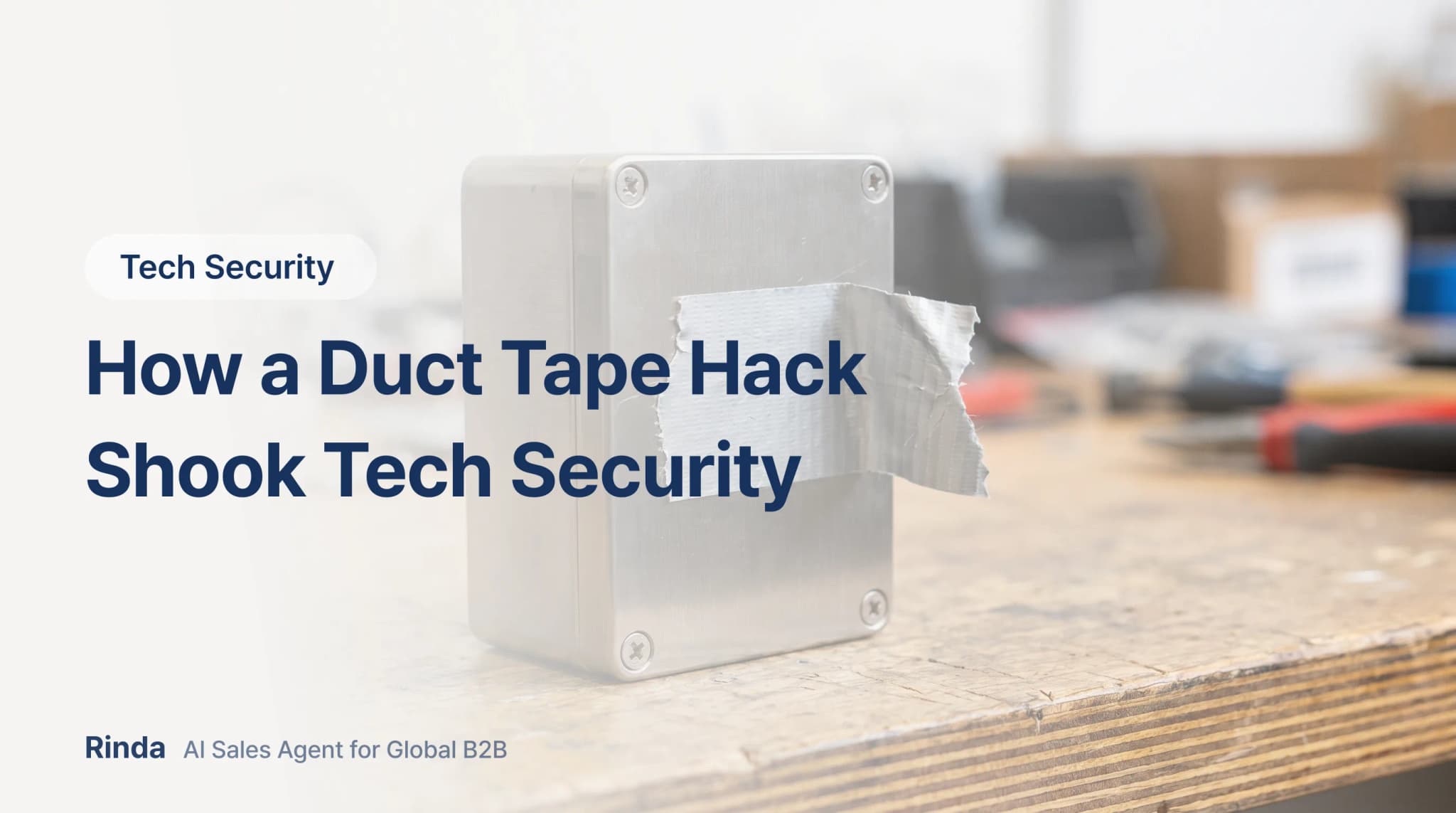
A project recently gained significant attention in security research circles: a researcher built an AI-based automated hardware probing device using only duct tape, a used camera, and a small, cheap CNC machine. This device works as follows:
- Analyzes live camera feeds using AI algorithms.
- Automatically identifies the locations of debug ports (JTAG/UART) on the circuit board.
- Positions probes precisely on the contacts to attempt firmware extraction.
Note that the detailed specs and internal algorithms of this AI model have not been fully verified in public materials; reproduction accuracy may vary depending on the environment and the target device. The source code for this project is open-source on GitHub, meaning anyone can download and assemble it.
The DIY + AI Threat: The Collapse of Entry Barriers
Previously, hardware security research was a field accessible only to those with tens of thousands of dollars in equipment and expert-level skills. This high barrier to entry acted as a form of "security by obscurity." However, the combination of DIY and AI is shattering this structure. Part costs have dropped to the hundreds of dollars, and AI replaces some of the expert judgement, bringing the cost of entry for hacking near zero. For manufacturers exporting IoT or industrial equipment, this is a clear signal that threat models must be fundamentally rewritten.
When Security Issues Kill Deals During Buyer Due Diligence
There is a reality often overlooked by exporters: hardware vulnerabilities aren't just about cyberattack risks—they are risks that directly determine whether a buyer contract is signed.
European smart home distributors and North American industrial buyers are steadily strengthening their security requirements during vendor due diligence. In the field, deals usually fail for three primary reasons:
First, evidence of firmware reverse engineering potential. If the buyer's technical team detects active JTAG ports during sample testing that allow for plaintext firmware extraction, they often question the product's IP protection levels and put the contract on hold. This is particularly critical if the manufacturer's core algorithms or authentication logic are exposed.
Second, missing or mismatched security documentation. If you cannot provide evidence that you meet the regulatory requirements of the importing country (such as the EU Cyber Resilience Act (CRA) or the U.S. IoT Cybersecurity Improvement Act), buyers may terminate discussions due to legal risks. Even if a certificate exists, if it does not match the actual product specifications, the same issue occurs.
Third, slow responses to security patches after claims. If a manufacturer lacks a firmware update procedure when a vulnerability is discovered post-delivery, buyers often stop further orders and switch suppliers. Because IoT claims can lead to legal liability, the existence of an incident response process is a primary selection criterion for buyers.
What Can This Device Actually Do?

JTAG/UART Vulnerabilities and Firmware Security: Understanding the Vectors
Let’s clarify some terminology. JTAG (Joint Test Action Group) is a standard debugging interface that allows external access to read and control the internal state of a chip. UART (Universal Asynchronous Receiver-Transmitter) is a serial communication port used to output logs or input commands during development. If manufacturers leave these ports enabled on the PCB for convenience, hackers can bypass firmware security and extract the entire firmware image. Once the firmware is exposed, the following become open for analysis:
- Encryption keys
- Authentication logic
- Hardcoded credentials
The NIST IoT Cybersecurity Guideline (NISTIR 8259) explicitly lists debug interface management as a core security requirement.
Practical Tip for Exporters: Inadequate management of JTAG/UART vulnerabilities is one of the most common reasons for failure during export voucher programs or security certification prep for overseas exhibitions. Addressing these issues before mass production is essential to avoid delays in certification or disqualification from trade shows.
What Changes with AI Automation?
Manual inspection used to take hours or days as experts inspected boards and poked ports with multimeters or oscilloscopes. With AI integration, the flow—camera analysis → positioning → contact attempt—is automated and repetitive. The speed, repeatability, and accessibility have all fundamentally changed. The core issue is that various devices can now be processed in succession without an expert present.
NISTIR 8259 Security Checklist for Exporters
NISTIR 8259 is an IoT cybersecurity standard issued by NIST in the US, frequently used as a benchmark for North American buyer audits. Below is a practical checklist for manufacturers to use before and after mass production.
| Item | Verification Content | When to Check |
|---|---|---|
| ① Disable Debug Ports | Are JTAG/UART ports disabled in production firmware? | Pre-production |
| ② Firmware Encryption | Is stored firmware encrypted to prevent reverse engineering? | Pre-production |
| ③ Remove Hardcoded Creds | Are passwords/API keys removed from source code? | Post-development |
| ④ Security Update Mechanism | Is an OTA or patch distribution process in place? | Pre-launch |
| ⑤ Access Control | Is role-based access control applied to device management? | Pre-launch |
| ⑥ Cybersecurity Documentation | Are design and threat model docs ready for buyers? | Pre-audit |
| ⑦ Vulnerability Disclosure Policy | Is there a formal VDP or incident response process? | Pre-launch |
This checklist can serve as a preliminary audit for trade show technical reviews, EU CRA declarations of conformity, and North American vendor onboarding.
Frequently Asked Questions (FAQ)
Q. Why do JTAG/UART ports often remain enabled after product launch?
They are often left active due to debugging convenience during development and quality assurance, and are neglected during the mass production stage. This oversight is a leading cause of hardware vulnerabilities and is a high-priority audit item for international certification.
Q. How can exporters stay prepared against these hardware vulnerabilities?
We recommend making debug port deactivation a mandatory part of your production checklist and implementing firmware encryption. Additionally, performing self-audits based on international guidelines like NISTIR 8259 or engaging a third-party audit firm to identify vulnerabilities early is highly effective.
Q. Does the rise of DIY hacking tools affect certification requirements?
Yes. As attack tools become more accessible, regulatory bodies tend to raise the bar for threat standards. EU CRA and NIST guidelines are increasingly addressing physical hardware attack vectors, suggesting that IoT export security requirements will continue to intensify.
Security is a Competitive Advantage in Sales
Hardware security is not just a job for the tech team. It is an issue that spans the entire export process: buyer due diligence, certification, contract negotiation, and claim response. A well-secured product does more than just reduce risk—it becomes a sales lever to persuade demanding buyers.
For sales managers looking to systematize the overseas buyer due diligence process, including security certification management, we recommend exploring Rinda (RINDA), an AI-powered export sales automation platform. It allows you to manage everything from buyer discovery to engagement history in one seamless process.
Sources
Want export insights in your inbox?
We'll send one email summarizing new posts from our blog and resource library.