70% of Exporters Vulnerable: Where Your Buyer Proposals in Free AI Actually Go
The Apple vs. OpenAI trade secret lawsuit isn't just a big tech battle. Discover how product specifications and buyer proposals carelessly entered into free public AI by sales managers can legally leak to competitors, and check our safe AI usage checklist.

70% of Exporters Vulnerable: Where Your Buyer Proposals in Free AI Actually Go
Since the advent of free, public AI, many companies have actively adopted it to increase operational efficiency. However, the data security threats lurking behind this convenience are far from a distant tech war or a future problem. A single buyer proposal or even a draft email casually entered into a free AI tool can become a critical trigger that decides the fate of your business.
In fact, in the first half of 2023, a trade secret leak via ChatGPT at Samsung Electronics' Device Solutions (DS) division—which boasts some of South Korea's highest-level security systems—sent shockwaves through the entire industry. Just 20 days after the company permitted ChatGPT usage internally to maximize work efficiency, a series of incidents occurred where key corporate secrets leaked to external AI servers. At the time, employees entered raw source code from semiconductor equipment measurement software to request error checks or optimization. There was even an instance where a recording of a confidential internal meeting was transcribed and uploaded to request a meeting summary. This incident was widely covered by credible media and security experts, painfully highlighting the severity of corporate data leaks when using public AI.
These security breaches at major enterprises are by no means isolated incidents. Recent surveys and industry trends from key security organizations, such as KISA (Korea Internet & Security Agency), paint an even more alarming picture. More than 7 out of 10 Korean exporting companies (over 70%) are using public AI in their daily operations without any clear data protection guidelines. The moment you feed a draft proposal, a new product specification sheet, or sensitive pricing info into a free AI translator, the damage is done. Your hard-earned trade secrets are absorbed as training data into global AI servers, routinely creating a "Buyer Data Security Gap" where your proprietary information could easily end up in a competitor's search results.
Watching from the Sidelines? This is the Reality of Your Company's International Sales Confidentiality
On the front lines of global trade, export managers repeat a fast-paced routine every day: organizing business cards collected from international exhibitions or quickly responding to complex inbound buyer inquiries. Under heavy pressure, sales managers often copy and paste product specification sheets, exclusive pricing tables, or NDA (Non-Disclosure Agreement) clauses under negotiation into public AI, asking it to "polish this into professional business English." While the quality and convenience of the instant output are impressive, the hidden bill for this security risk can be unimaginably devastating.
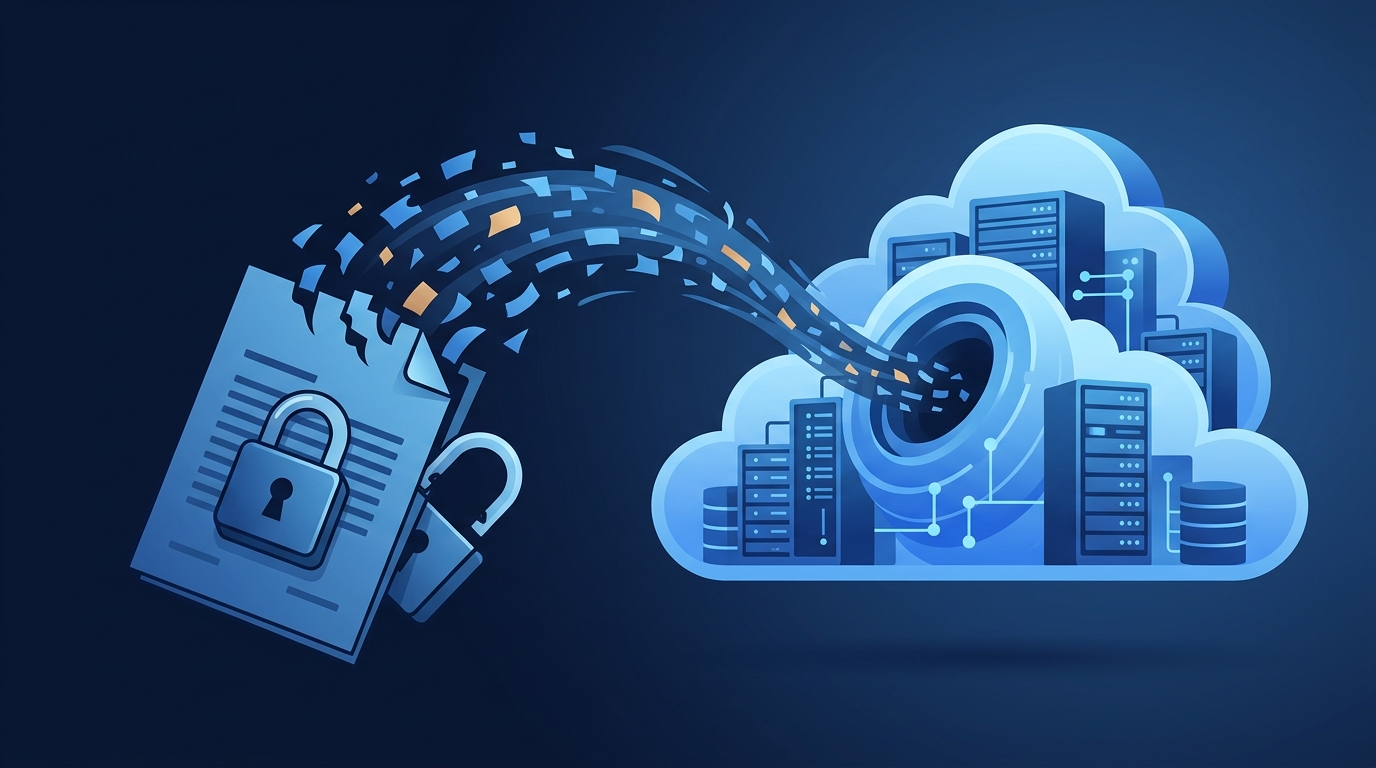
The mechanism of data leakage is simple yet structural. Most free public AI platforms are configured by default to opt users in to having their prompts (questions and data) used to train future versions of their models. In other words, unless you explicitly opt out, every piece of text you input is harvested as raw material for AI training.
Under this structure, what happens if a competitor in the US, China, or Europe later asks, "Summarize the recent export prices, core specs, and target markets for Korean smart home appliance brands"? The contents of the buyer proposals and exclusive pricing that your export manager meticulously entered late last night could pop up on the competitor's screen as if the AI analyzed it itself. Months of R&D and sales strategy could be handed over to competitors for free in just a few clicks.
The Trap of Fast Follow-ups: Are APIs Completely Safe from Free AI Translation Risks?
Anyone in international sales knows that speed is everything. Based on our internal observation and analysis of pipeline data from numerous exporting companies, groups that sent personalized follow-up emails within 48 hours of an international exhibition or initial meeting showed a significantly higher reply rate than those who followed up after 7 days. (Of course, the impact of timing can vary based on industry characteristics, regional business cultures, and payment terms. For long-cycle purchasing industries with complex decision-making processes, the gap in short-term reply rates might be slightly smaller.)
To protect this "48-hour golden window" and handle as many buyer leads as possible with limited staff, many small and medium-sized exporters hastily adopt public AI or cheap API-based translation tools without proper security audits or legal reviews. While this seems like an attractive option to skyrocket work efficiency, it is a double-edged sword.
However, until security standards for general-purpose APIs and enterprise solutions are legally redefined and tightly regulated, such integrations will inevitably harbor critical free AI translation risks and compliance issues. Chasing speed and efficiency without clear internal security guidelines or data control environments is highly risky. It leaves structural loopholes wide open, allowing NDA clauses, exclusive contract pricing, and sensitive partner information to leak straight into external databases.
The "Export Security Guide" Checklist for Export Managers to Implement Today
To build a safe and sustainable global sales environment, protecting core corporate data must take priority over immediate convenience. Here are five actionable guidelines based on our export security guide that sales managers should share on team channels and implement starting this afternoon.
- Make Data Masking a Habit: If you absolutely must use an external AI tool to translate or summarize pricing sheets, exclusive contracts, or product specs, always anonymize the buyer's company name, project names, key figures, and email addresses. For example, replace "Company A's 2024 shipment" with "Project X," and temporarily change sensitive prices or quantities to "000" before inputting them. Re-entering the original figures manually after receiving the AI output is a small price to pay to defend against critical data leaks.
- Double-Check Your Opt-Out Settings: If your team uses public AI platforms, open your account settings right away. Build a habit of manually checking if the option to "not use my data for model training" (Opt-out) under "Data Controls" is clearly toggled on. Since these settings can sometimes reset when terms of service are updated, periodic audits are essential.
- Establish and Document Security Approval Procedures: You may occasionally need to input highly secure documents, such as core specs of new products, undisclosed patent info, or technical documents involving exclusive distribution rights. Instead of leaving this to the discretion of individual employees, restructure your workflow to require prior security approval from team leads or higher. We recommend establishing clear internal guidelines detailing which documents are permitted and which are strictly prohibited.
- Strictly Separate Enterprise/B2B Tools from Public Tools: Break the habit of handling all tasks in a single tool. Separate simple tasks, such as polishing cold email greetings or summarizing public market research, from highly sensitive tasks like drafting buyer proposals or reviewing NDAs. The latter should only be processed within a closed network environment or on dedicated platforms with rigorously verified data security.
- Implement Regular Data Security Audits: You must be able to track who is entering what level of sensitive data into external solutions or translation tools and when. We recommend introducing a monthly checklist sheet at the department level to track and audit AI usage and data entry history. This will elevate overall security awareness within the organization and neutralize potential risks early.
From Prospecting to Proposal: What a Compliant Platform Requires
Fearing security risks shouldn't mean giving up operational efficiency and stopping AI usage entirely in a fierce global market. Reverting to manual processes will only erode your export competitiveness. Ultimately, the key to business success lies in "how you choose and safely control your tools." Utilizing a dedicated B2B platform that fundamentally prevents corporate data from leaking or being used for training external AI models is the most reliable, realistic, and long-term solution.
RINDA, an AI platform that automates international buyer prospecting and sales for exporters, details its global buyer database scale of "800M+ buyers across 200+ countries" on its website. It transparently displays the number of buyers in key target regions—including the US, China, Japan, and Europe—on a map and dashboard to support strategic planning. (Please note that these figures represent RINDA's own scale and may vary slightly depending on website updates, press release placements, and data sync timing.)
Boosting outbound sales performance using this massive global buyer pool while maintaining a strictly controlled, independent security environment. Having a platform that fundamentally prevents the personalized cold emails you send or the buyer proposals you've spent months negotiating from ever being used to train external AI models—this is the true export competitiveness in an era where data is your greatest asset.
Written by · RINDA Export Sales Research Team (International Buyer Prospecting & Export Sales Automation Research Editors)
We closely analyze pipeline data from over 200 Korean exporters along with internal insights from the RINDA platform. Based on this research, we meticulously curate actionable strategies and checklists that export professionals can implement immediately in the field.
Disputes over intellectual property and trade secrets are intensifying more than ever in today's global business landscape. We hope sales managers protect their hard-earned trade secrets from being vulnerable in unshielded AI environments. Do you want to safeguard your core company data with obsessive scrutiny while automating everything from buyer prospecting to proposals in the fastest, most secure way possible? We invite you to build a secure, compliant global sales environment with RINDA, the AI platform that automates international buyer prospecting and sales.
Learn more about the Rinda platform About Grinda (AI Export Automation)
📌 Recap for Share "At first glance, free public AI looks like a powerful export weapon that saves time. However, without solid compliance reviews and a strictly controlled environment, it ultimately turns into a legal channel that hands over your company's core trade secrets to competitors."
Frequently Asked Questions (FAQ)
Q. Is using a paid version of public AI completely safe from training data leaks? Simply paying a monthly subscription fee does not guarantee absolute safety from data security issues. Unless you sign a separate enterprise agreement or explicitly apply strict data protection and training opt-out clauses at the API level, security gaps remain. Furthermore, platform terms of service are updated frequently, making periodic terms reviews and cross-checks essential even after adoption.
Q. Do we really need to protect a target buyer's information when sending cold emails? Absolutely. Privacy laws, including the EU's GDPR, are tightening aggressively worldwide. Feeding a target buyer's personal email, direct line, or sensitive internal contact details into a public AI or unverified platform could trigger severe legal risks down the road. Therefore, to ensure robust international sales confidentiality for both your own trade secrets and your partners' data, please manage this information with extreme care.