Hacking Arms Made with Duct Tape and AI — The Era of 'Good Enough' Tools
Analyzing the message that a DIY AI hardware prober—built with a second-hand camera and duct tape—sends to the security industry. We examine from the GRINDA AI team's perspective how 'good enough' tools are disrupting the logic of professional equipment markets and discuss the implications of such democratization.
Hacking Arms Made with Duct Tape and AI — The Era of 'Good Enough' Tools
TL;DR The barrier to entry for AI hardware security testing is lowering. A low-cost AI automatic prober, assembled with duct tape, a second-hand camera, and a CNC machine, went viral on Hacker News, signaling that 'good enough AI tools' are beginning to replace certain roles of professional measurement equipment. This shift offers direct implications not just for hardware security research, but also for manufacturing and startup environments.
It has long been conventional wisdom in the industry that AI hardware security testing is only possible with expensive measurement equipment costing tens of thousands of dollars and engineers with years of experience. However, in 2025, a project that directly challenged that premise gained massive traction on Hacker News. Is the excuse that "I can't do it because I don't have the equipment" still valid? The tools used were a used camera, a CNC machine, and duct tape.
Is Low-Cost PCB Vulnerability Analysis Possible Without Million-Dollar Gear?
Traditional Barriers to AI Hardware Security Testing
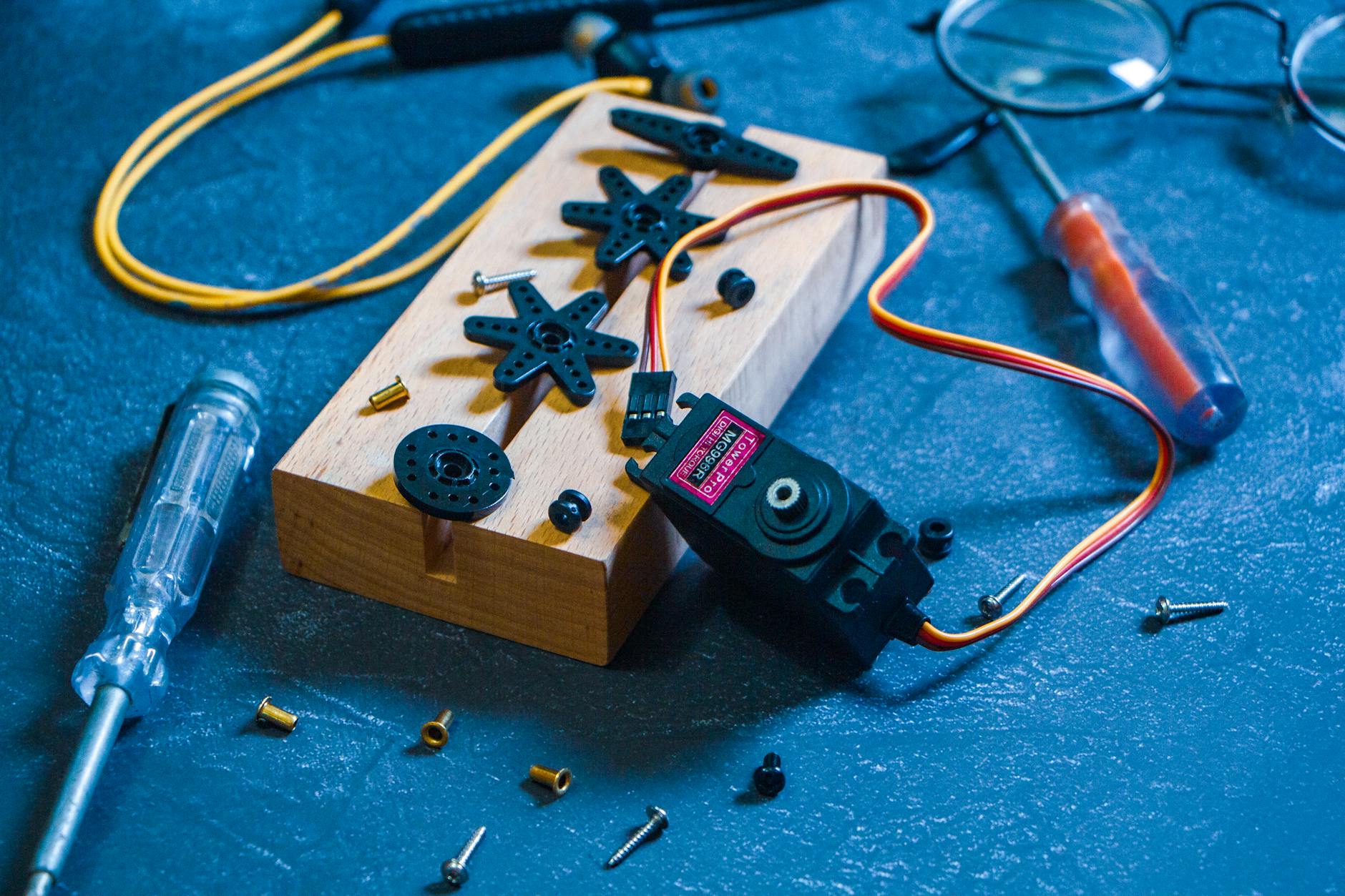
Hardware security research, particularly exploring vulnerabilities in PCBs (Printed Circuit Boards), has traditionally had high barriers to entry. Several factors have contributed to this:
- Professional Equipment Costs: Logic analyzers, oscilloscopes, and precision probe stations start at thousands to tens of thousands of dollars for a basic setup.
- Reliance on Skilled Personnel: The engineer's labor and experience dictate the quality of the test.
- Organizational Scale Limits: Consequently, hardware security testing has been a domain reserved for large labs or specialized firms.
The 'I Lack the Equipment' Excuse is Cracking
That formula is starting to break. The core of this project isn't just replacing expensive gear with cheap hardware. It’s that the combination of AI and low-cost hardware has started to perform the roles previously held by professional equipment in a different way. It is not a question of cost, but a paradigm shift in accessibility.
The AI Automatic Prober Made of Duct Tape, Used Cameras, and CNC Machines
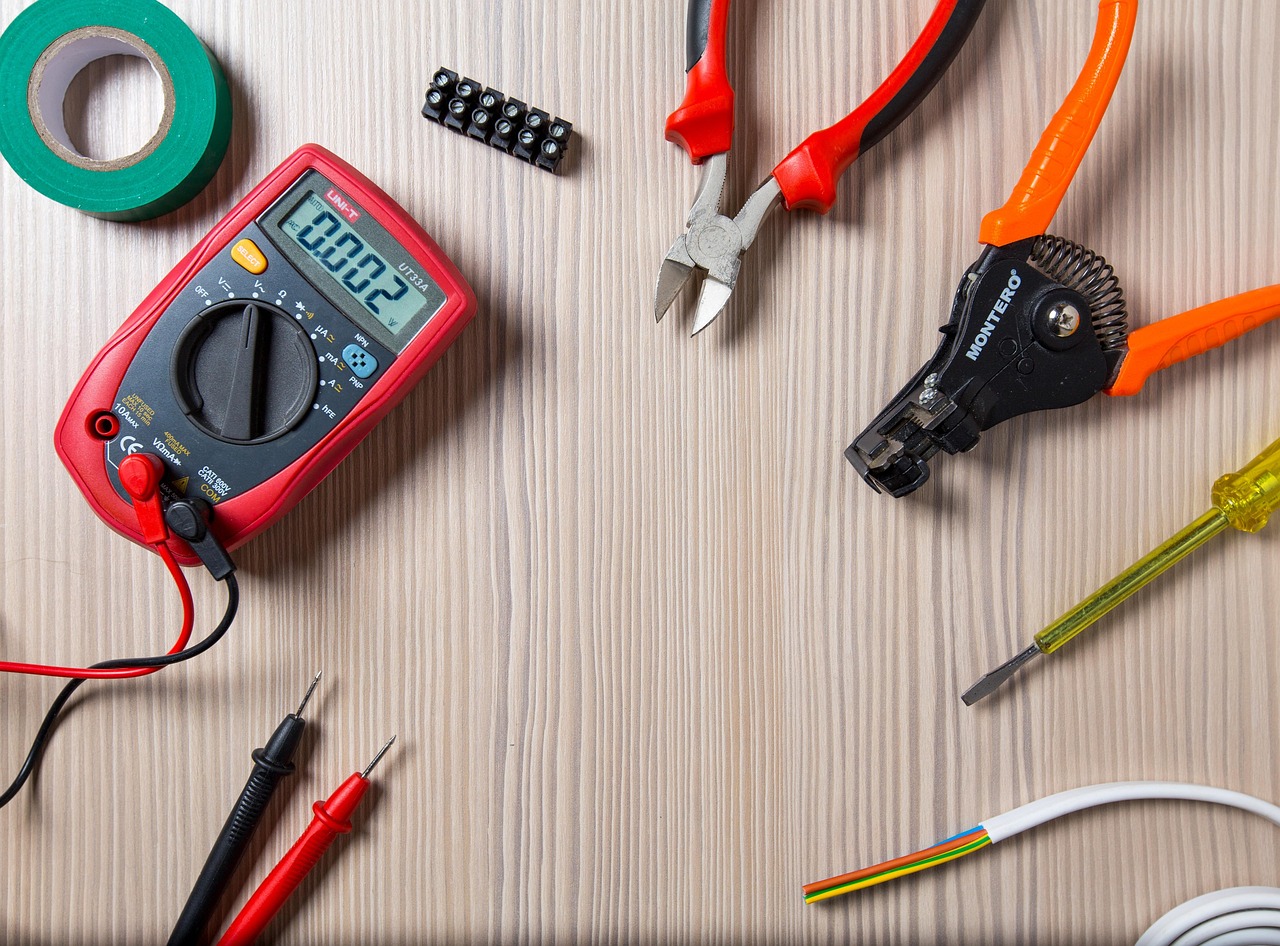
Project Components: What Was Used
Breaking down the role of each component reveals the structure:
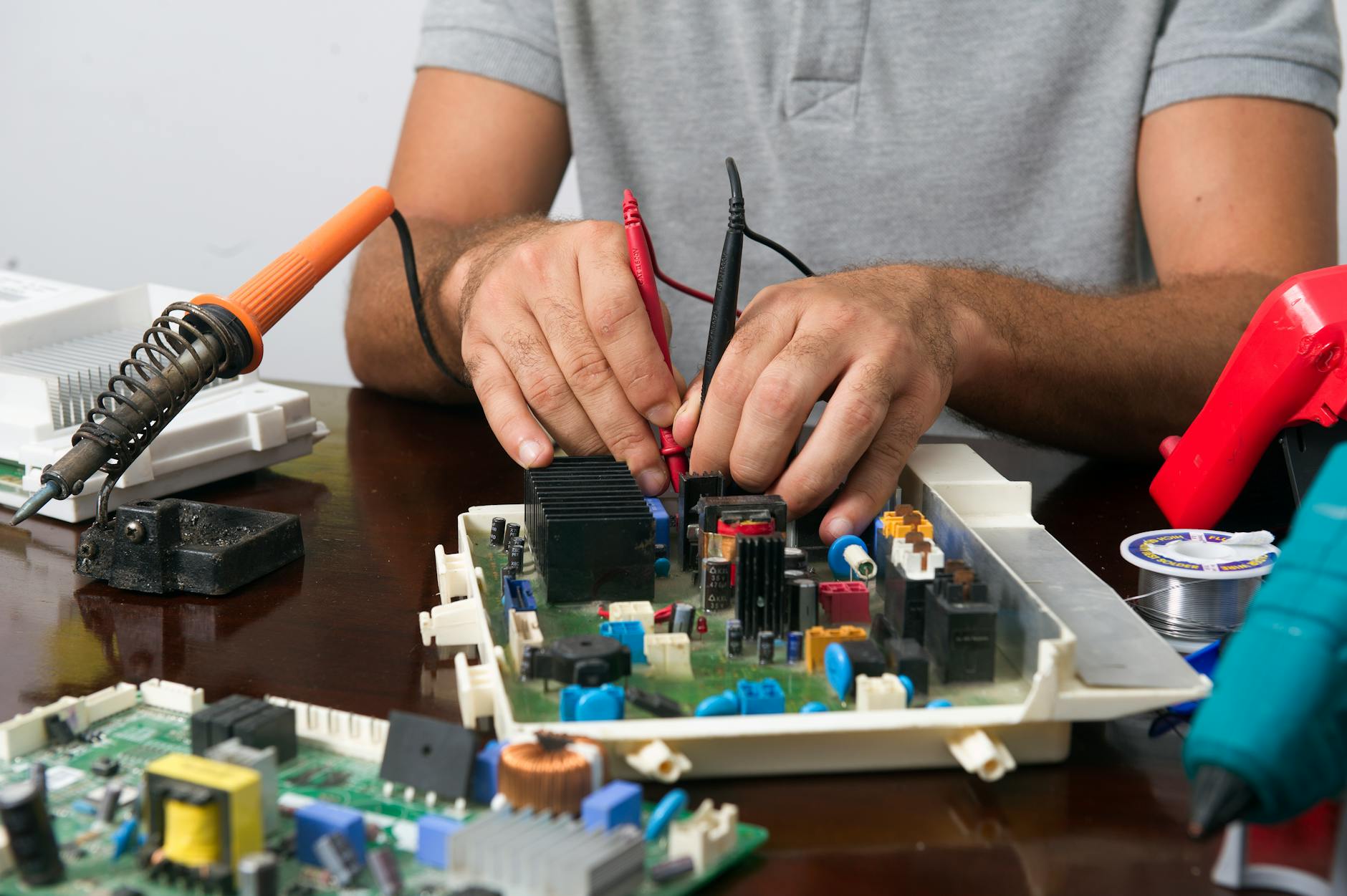
- Second-hand Camera: Captures the PCB surface to collect image data.
- CNC Machine: Handles physical control, moving the probe (contact pin) with precision to specific coordinates.
- Duct Tape: A practical fastener to stabilize components without shake.
This structure eliminates the need for expensive high-precision stages.
What Exactly Was the Role of AI?
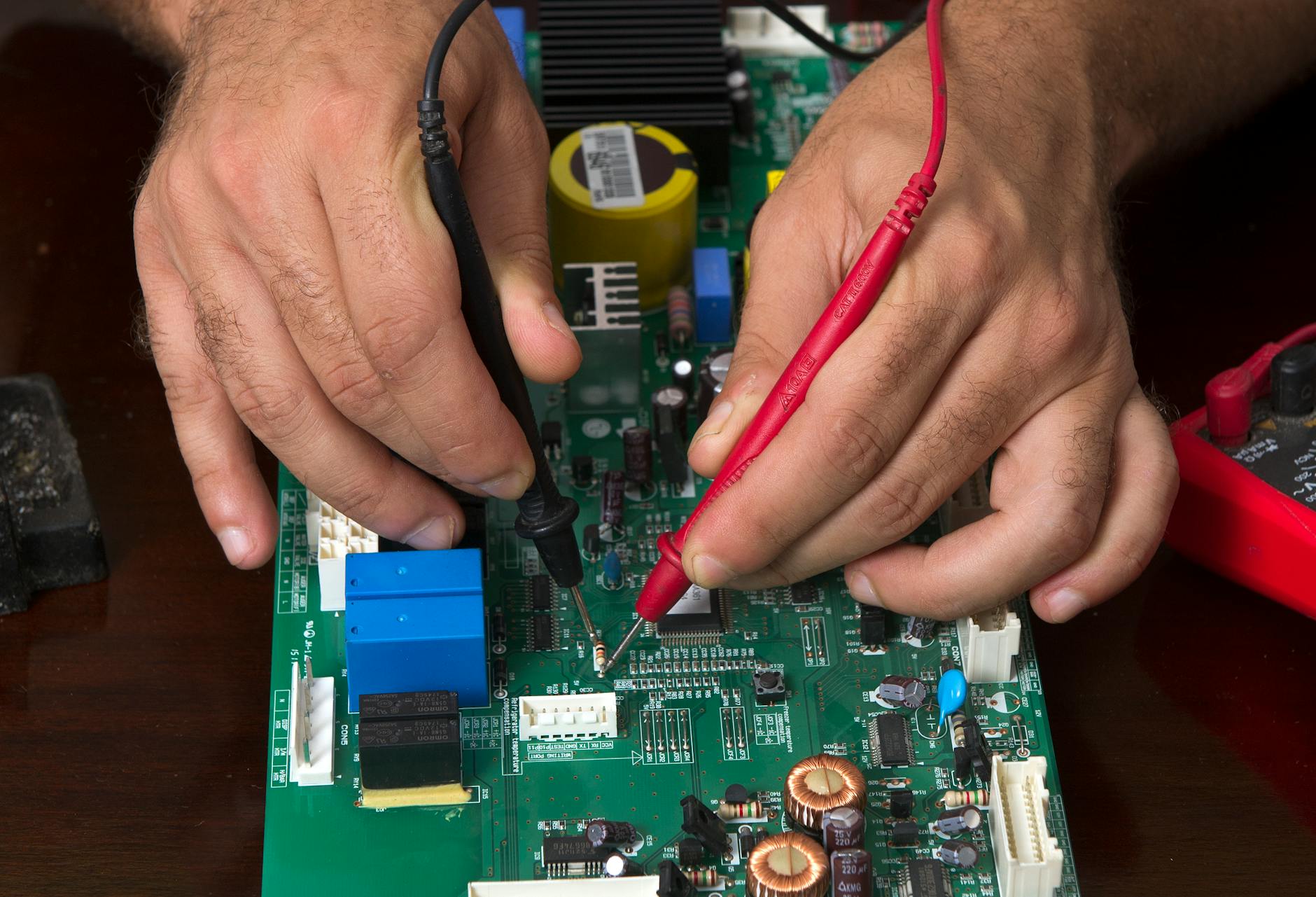
Where AI intervenes is the real core of this project. AI analyzes the PCB images captured by the camera to recognize test pad locations and classifies signals gathered from each pad as normal or abnormal. From creating scripts to automate repetitive test sequences, AI handles tasks previously done manually by skilled engineers. However, this project is strictly a proof-of-concept. Public data validating performance metrics like precision or error rates is not yet available, and its reliability in industrial settings needs separate verification.
Why Open-Source the Probing Tool? Community Reactions
The reason the Hacker News community was so enthusiastic about this project wasn't just technical maturity. The narrative of creativity under constraints—symbolized by "duct tape"—resonated deeply with community sentiment. Releasing the code and design as an open-source tool was a declaration to keep reproducibility open. The community erupted with simultaneous attempts at reproduction, improvement suggestions, and ethical concerns. The two reactions, "Can our team build this?" and "What if this is misused?" coexisted.
The Real Question This Project Asks: Changing Barriers to Hardware Security
The Rise of 'Good Enough AI Tools' Rather than 'Cheap Tools'
This case is significant not just because it is cheap. It is a sign that the "Good Enough Hardware" concept has started to work in practice. There is a clear category of tasks where you don't need 100% of the precision demanded by professional equipment. There are contexts where you can get the signals needed for decision-making with 80–90% results, and in that domain, the combination of 'good enough' AI tools and low-cost hardware is entirely practical.
How the Logic of Professional Equipment Markets is Shaken
The logic of the professional measurement equipment market is based on the equation: "Precision = Reliability = Price." If AI takes over image recognition and pattern classification, the precision requirements for physical equipment can be lowered to a certain level. It's a structure where software (AI) compensates for hardware limitations. While this approach cannot be applied to all AI hardware security domains, it is undeniable that the entry barrier for hardware security is effectively lowering in specific work categories.
Implications for Korean Security Research and Manufacturing
In the Korean context, similar approaches are being explored in small security research institutes, startup hardware teams, and manufacturing quality control sites. There are channels to receive partial funding for initial tool costs through security research support programs from KISA or the KOTRA Export Voucher. however, since budget exhaustion periods and industry restrictions vary, it is essential to check official notices before implementation.
The Flip Side of Democratization: Blurring the Line Between Research and Attacks
The Double-Edged Sword of Open-Source Probing Tools
To be frank, open-sourcing this project is a double-edged sword. The accessibility opened to security researchers is equally opened to malicious actors. A lower entry barrier for low-cost PCB vulnerability analysis tools means the possibility of their use for attack purposes also lowers.
Lowered Barriers for Malicious Actors, Too
The 'dual-use dilemma,' long discussed in the security community, appears exactly here. The same tool can be used to discover vulnerabilities and prompt patches, or conversely, to exploit them. This is the reason why systems like CVE(Common Vulnerabilities and Exposures) and frameworks for Responsible Disclosure exist. The reality is that there is no consensus yet on the ethical and legal standards to accompany the release of open-source hardware hacking tools, and the discussion has not kept pace with the speed of technological advancement.
New Standards for Responsible Disclosure
Our GRINDA AI team has discussed this internally at length. As a team designing and distributing AI tools, the principle that "technology is not neutral" is reflected in our product decision-making. Deciding what features to release and when, and what context of use to explicitly guide, are issues that must be judged separately from technical maturity. We cannot say we have the perfect standard yet, but we believe simply holding onto this question is significant.
What the Team Learned: What Tools Should We Be Building?
The Meaning of Designing 'Good Enough AI Tools'
When we first encountered this project, the internal team response was, "We are experiencing similar concerns." The tool really needed by practitioners in export fields is not a perfect AI. It is a tool they can trust and use even within three constraints: limited budget, insufficient data, and short onboarding times. There are moments when the standard of "Good Enough" becomes a design principle rather than a compromise.
When Constraints Become the Condition for Innovation
Honestly, we initially thought more sophisticated models, more data, and longer development cycles were the conditions for a good tool. But watching people use these tools in real export field work changed our minds. Often, a fast feedback loop is more valuable than completeness, and simplicity beats precise predictions. That is why the duct tape project is a reminder that "constraints are the conditions for innovation."
When We Face the Same Question in the Export Field
There are problems we haven't solved yet. Just as buyer response patterns vary by industry, the variables in export environments are difficult for AI to cover with a single model. From what we have observed, teams who sent follow-up emails within 48 hours after an overseas exhibition showed significantly higher buyer response rates than those who did not. However, the magnitude of this effect varies by industry and country, and it is hard to generalize with a single figure. So, we continue to observe and refine, bit by bit.
Conclusion: Where Does Our Team Stand in the 'Good Enough' Era?
Expanding the Scope of What's Possible as Hardware Security Barriers Fall
If there are things you are putting off because you "don't have the equipment" or "lack the manpower," I encourage you to check if those premises are still valid today. What the AI prober made from duct tape and a used camera showed is not technical perfection. It is a signal that 'good enough' tools have begun to solve 'good enough' numbers of problems. This change is not limited to the AI hardware security domain.
If You Are Considering the Next Step
Even if we can't give you the answer, we can help you organize the questions.
Author · RINDA Export Sales Research Team (Research Editors for Overseas Buyer Discovery & Export Sales Automation)
We curate strategies and checklists for immediate use in export operations, based on buyer outreach pipeline data from over 200 Korean exporters and internal observations from the RINDA platform.

If you are considering introducing AI tools in your export operations, it might be worth looking into how GRINDA AI approaches B2B export automation matters. If you are interested in automating buyer discovery, I also recommend exploring the approach of RINDA. While no perfect solution exists, you can find a 'good enough' starting point that fits your team's current situation.
Q&A
Q. Can such low-cost AI hardware security tools be used for actual security certifications or compliance verification? A. Currently, no. This project is a proof-of-concept. Official security certifications or industrial compliance verification require validated measurement equipment and procedures that meet recognized standards like ISO/IEC. Low-cost AI probers are meaningful for quickly checking hypotheses in the research/discovery phase; official certifications must go through specialized, separate processes.
Q. Are there legal considerations when using open-source probing tools in Korea? A. Yes, there are. In Korea, this could relate to the Information and Communications Network Act or crimes such as computer obstruction under the Criminal Act. Security testing on devices you own or have been authorized to test is generally allowed, but unauthorized application to third-party devices can lead to legal issues. Even for research purposes, we recommend checking with legal experts or the relevant guidelines from KISA in advance.
Q. What is the standard for 'Good Enough AI Tools' defined by GRINDA AI? A. We use three criteria internally. First, can practitioners use it without lengthy additional training? Second, when inaccurate results occur, can a human quickly detect and correct them? Third, does it actually work with the team's current data and budget levels? If the answer is 'Yes' to all three, it is a 'good enough' tool. Field-suitability comes before perfect precision.