
What Remains When AI Breaks Down the 'Knowledge Barrier'?
Recently, I had the chance to speak online with an export manager at a Korean food manufacturer. Despite limited English and Japanese skills and less than three years of experience, they proudly reported getting replies from 10 Japanese food trading companies. "To be honest, it feels like I wrote it with AI rather than writing it myself." Those words stuck with me...
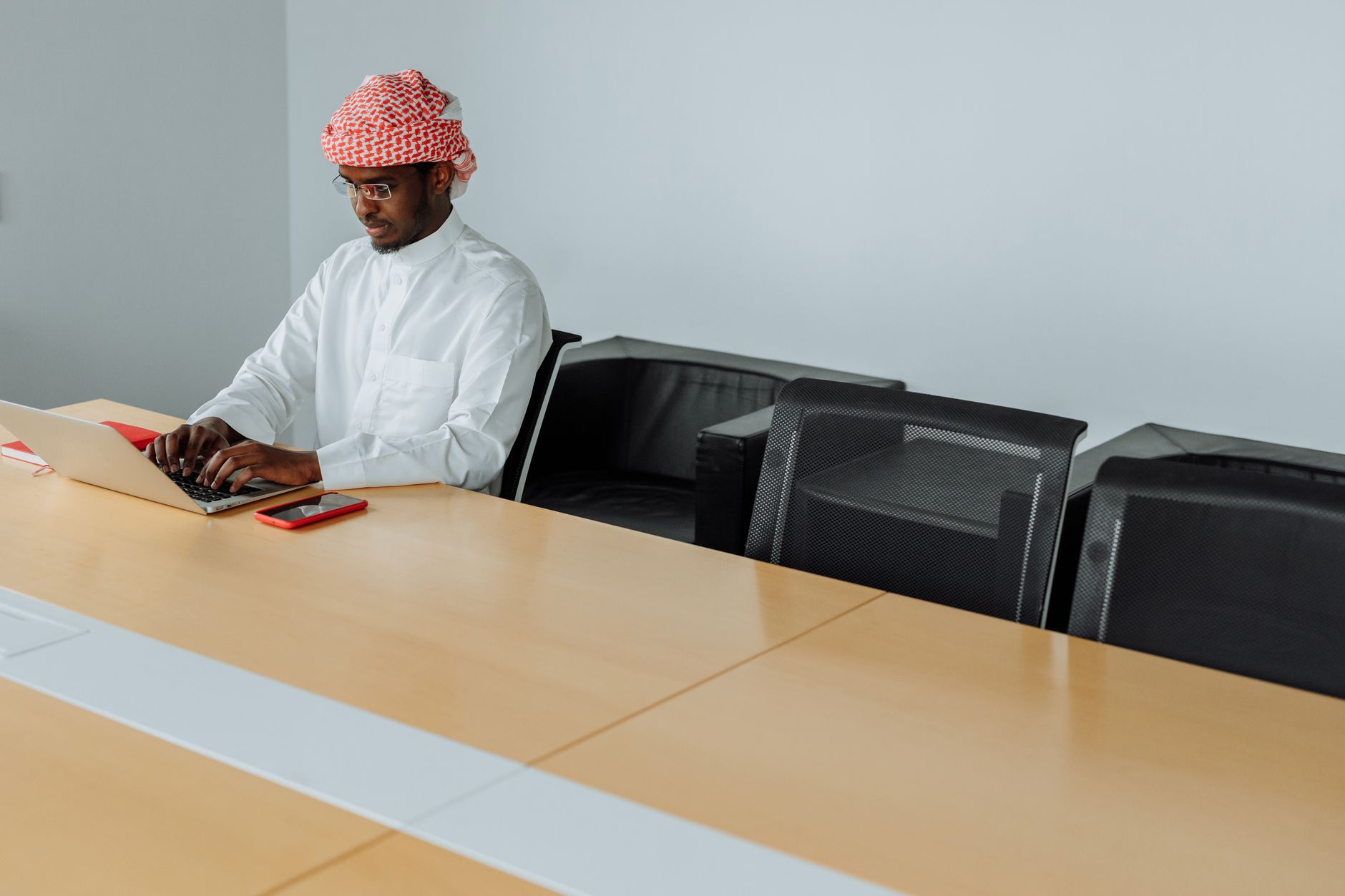
The Era of "Amateurs Rewriting History": How AI is Breaking Down the Knowledge Barrier in Export Sales
Export sales long-held assumption that "you cannot compete without expertise" is quietly starting to crumble. Recently, I had the opportunity to speak online with an export manager at a Korean food manufacturer.
This manager was not fluent in either English or Japanese and had less than three years of experience in export sales. Yet, they shyly shared that they had secured replies from 10 Japanese food trading companies.
"To be honest, it feels more like I wrote it together with AI than on my own."
Those words stuck with me. This article is written for export sales professionals—especially those who feel they "aren't experts but want to take that first step into the Japanese market."
Where is the "Expertise" of Export Professionals Going?
In the past, export sales was said to require a "triple threat" of expertise:
Language skills, industry networks, and an understanding of local business customs.
Acquiring all three individually required a career of at least five to ten years. Large trading companies and specialized firms dominated because they accumulated this know-how institutionally. For SMEs or emerging exporters to overcome this barrier, they had to either hire external experts or spend years training internal staff. That was the norm.
However, from what we have observed within RINDA, this structure is quietly but surely beginning to shift.
The change is not dramatic. It is a quiet accumulation of everyday moments—like waking up to hear, "I had AI polish my English email for the first time yesterday, and I already got a reply."
From "Translation" to "Thinking Assistant": How the Business Use of AI Has Evolved
In the early stages, AI was used simply as a "translation tool."
People would draft a message in their native language, translate it directly into English, and send it. To be honest, this approach rarely yielded results. Directly translated emails are instantly obvious to recipients. Even if the grammar is flawless, a message that fails to consider the recipient's context will not resonate, no matter how polite it is.
What was surprising was that reply rates began to shift the moment the use of AI transitioned from "translation" to "structuring the argument."
Specifically, it looks like this:
Before sending an email, exporters use AI to brainstorm: "What pain points does this buyer have?" or "What is our product's unique selling proposition in the Japanese market?" Only after clarifying these points do they draft the message. When AI functions as a "tool to extract thoughts" rather than just a writer, the quality of the output undergoes a transformation.
This was shared with us by a RINDA user, and we have observed the exact same pattern repeated across many cases. Instead of "deciding what to send and then asking AI to write it," they "think with AI about what should be sent first." This reversal of order is the common denominator among professionals who truly master AI sales agents for international outreach.
Rethinking What It Means to Be an "Amateur"
Let us pause and unpack the phrase "amateurs rewriting history."
This does not mean "anyone can do anything."
Rather, it means that the environment is now ripe for individuals without deep, context-specific knowledge to generate expert-level outputs.
For example, when reaching out to food buyers in Japan, exporters traditionally needed the following knowledge:
- Basics of Japanese food labeling standards and import regulations
- How to write business emails in Japanese (including proper honorifics)
- The distribution structure of Japanese trading companies, wholesalers, and retailers
- A sense of seasonality and product life cycles in Japan
Today, the parts that can be looked up or supplemented by AI are growing rapidly. What cannot be automated is the underlying judgment: "Why am I proposing this to this prospect at this exact moment?"
In other words, AI supplements "knowledge retention," not "strategic judgment."
If you use AI without understanding this distinction, your progress will eventually stall.
What Has Actually Changed? Insights from the Frontlines of Exporting
Looking at our internal data at RINDA, we noticed something interesting.
For many exporters who begin using AI tools, the very first change they experience is not "getting a reply," but rather "being able to hit send."
When language and knowledge barriers exist, outreach often never happens. Business cards gathered at trade shows sit forgotten in Excel sheets, follow-up emails are postponed for weeks, and momentum is lost. This is the classic pitfall.
AI lowers this "pre-send friction."
When the effort required to draft an email drops significantly, the threshold for taking action lowers. As outbound volume increases, the absolute number of replies naturally goes up. This simple dynamic is what led to the junior manager securing replies from 10 trading companies.
When observing exporters using RINDA, teams that fully integrate AI sales agents show a clear pattern: an increase in outbound volume happens first, followed by an improvement in meeting quality. The order is crucial. By sending emails first, you kickstart the loop of continuous improvement.
Its importance cannot be overstated. However, there is a catch.
If you only stop at "being able to send," you will hit another wall. The next steps after a reply—price negotiations, sample shipping, and contract terms—require highly contextual, human judgment.
"AI opened the door for us. But once inside, we still have to tidy up the room ourselves."
One of our users put it this way, and I think it is the perfect analogy.
What Remains When the "Knowledge Barrier" Melts Away
The trend of AI lowering the barrier to expertise will undoubtedly continue.
What, then, remains?
From our observations, the following three elements are becoming increasingly valuable:
First, the genuine desire to understand the prospect.
AI can generate text, but researching, analyzing, and hypothesizing "what this prospect is struggling with right now" remains human work. The depth of your research directly dictates the quality of the email. Teams that meticulously study a target company's website before prompting the AI achieve vastly different results compared to those who do not—a pattern we see time and time again.
Second, the determination to persist.
Japanese business culture requires time to build trust. Deals are rarely closed with a single email; relationships are often nurtured over six to twelve months (a point emphasized in JETRO's market entry guidelines). Even if AI can draft emails in seconds, you will make no progress without the persistence to follow through. Can you continue following up at appropriate intervals, even when you don't get an immediate reply? This persistence is something AI cannot replicate.
Third, the willingness to show up in person.
No technology can replace this. Shaking hands at trade shows, hosting factory tours, and sharing meals with partners still carry immense weight in Japanese B2B trade. While rarely discussed in the context of AI tools, almost every success story we see involves these "analog touchpoints." Opening doors digitally and sealing trust physically is the ultimate combination working on the ground today.
What You Can Do Right Now in Export Sales
To make this actionable rather than just saying "use AI," here are a few concrete steps.
Based on our observations of successful exporters using RINDA, high-performing teams consistently do the following:
First, narrow down your target.
Don't target "all of Japan" or "general food buyers." Instead, define your target as "wholesalers and trading companies dealing with organic food in the Kansai region, with annual revenues of $50M to $500M." This level of specificity allows you to give concrete prompts to your AI. Vague prompts only yield vague outputs. If your targeting is loose, even the best AI sales agent won't deliver results.
Second, use AI as a sounding board.
Before asking AI to write an email, ask: "What are three potential concerns this buyer might have?" or "What are the weaknesses of launching this product in the Japanese market?" Just adding this brainstorming step dramatically elevates the final quality of your message.
Third, track your outbound data.
Track which subject lines get the best reply rates and which industries respond most. Without this data, you cannot build an optimization loop. A simple Excel sheet is more than enough. Over time, this data will serve as a map of your target market.
In Conclusion: Who is "Rewriting History"?
Perhaps the phrase "amateurs rewriting history" is slightly misleading.
What is actually happening is that people without traditional niche expertise are now empowered to compete on a global stage. The ones rewriting history are not the AI tools themselves, but the people who use them while keeping their strategic thinking sharp.
As the knowledge barrier dissolves, what truly matters is the ability to continuously ask: "Why this prospect, why now, and why this offer?"
That is not a tool—it is a habit.
FAQ
Q. Is it really possible to enter the Japanese market using AI with zero prior export sales experience?
A. Yes. We have seen an increasing number of complete beginners write high-quality outreach emails by using AI as a "thinking partner" rather than just a translator. However, AI cannot handle everything. Post-reply negotiations, pricing, and contract terms still require an understanding of local business customs. It is more accurate to say that AI dramatically lowers the barrier to entry.
Q. What is the most effective way to use AI when reaching out to Japanese trading companies?
A. Before asking the AI to "write" an email, first use it to brainstorm: "What pain points does this target have?" and "How does our product stand out in the Japanese market?" Users report a marked increase in response rates once they started using AI for this structural mapping phase. Additionally, tracking your data (subject lines, response rates by industry) to build a continuous feedback loop is essential.
Q. Even with AI, what are the things in the export business that only humans can do?
A. There are three main things: 1) The strategic judgment of "why this offer to this prospect right now," 2) the persistence to build relationships over 6 to 12 months, and 3) the proactive drive to establish physical touchpoints (such as trade shows and factory visits). AI handles "knowledge retrieval and synthesis," but "judgment" and "relationship building" remain uniquely human.
We hope this article gives you some food for thought. We would love to hear your feedback in the comments!
If you would like to learn more about export support from Korea to Japan, please check RINDA's reports or contact us. We are available via LINE and email. Contact us / Add us on LINE here
RINDA Japan Desk · Go-to-Market Lead for Korean Exporters Entering Japan
#ExportSales #ExportBusiness #JapanMarketEntry #AIForBusiness #ColdEmailOutreach #KoreanExports #EnteringJapan #B2BSales #ExportSupport #AIAgents #GlobalExpansion #Exporters