The Irreplaceable Weapon of Global Sales Professionals in the AI Era
In an era where AI handles buyer lists and email drafts, success still comes down to human input. We break down the three core competencies—relational judgment, contextual interpretation, and trust design—that automation cannot replicate.

The Irreplaceable Weapon of Global Sales Professionals in the AI Era
Even in an Era Where AI Finds Buyers, Success Still Depends on People
With the proliferation of AI for global sales, tasks that used to take days now take 30 minutes. As tools like LinkedIn Sales Navigator, Apollo, and domestic AI-based buyer prospecting platforms become mainstream, "list generation" is no longer a unique competitive advantage. Yet, we are seeing a strange phenomenon: more teams are using these tools, but fewer are seeing a significant rise in conversion rates.
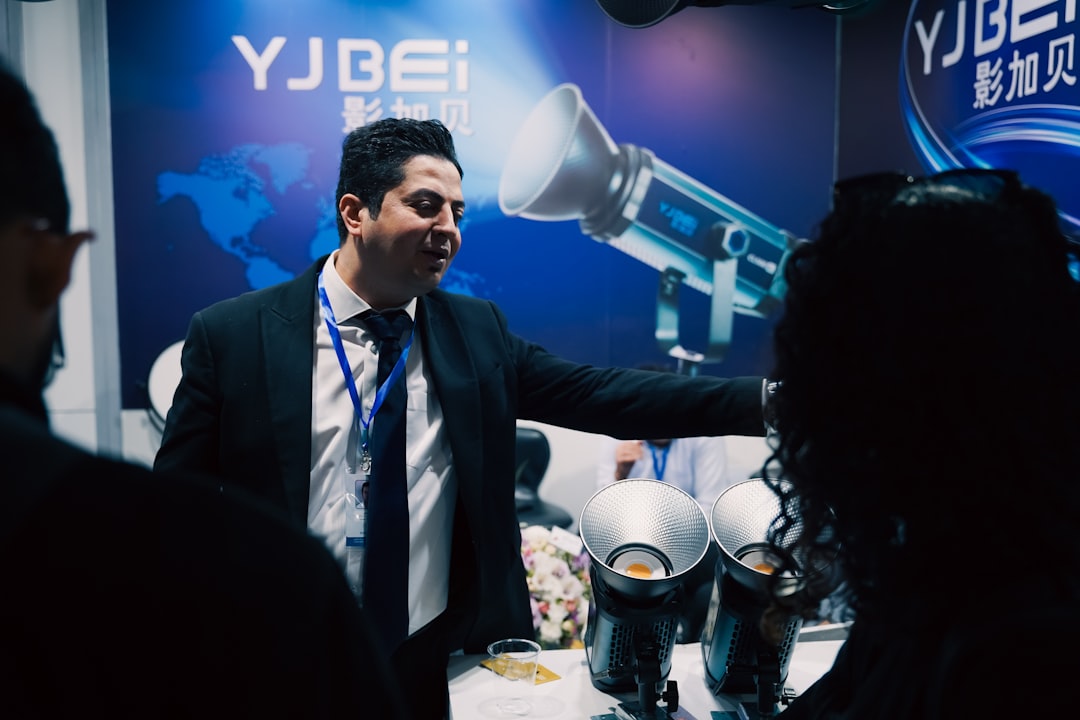
Our RINDA team looked into the pipelines of over 200 Korean exporters and discovered an uncomfortable truth: initial responses come through, but the deal stalls at the next stage. Communication goes silent after "I'll review it," or samples are sent with zero follow-up for three weeks. AI opens the door, but stepping inside remains a human task. With the clear limits of export automation, this article explores the true competitive advantage for today's sales professionals.
Tasks Absorbed by AI vs. Tasks That Remain Human-Centric
We don't subscribe to either the fear that AI will replace everything or the optimism that it's "just a tool." A task-based breakdown provides a much clearer picture.
Automation has already absorbed significant ground:
- Target buyer list generation
- First-touch email draft creation
- Multilingual translation of product brochures
- Meeting scheduling
These are repetitive, standardized tasks. Frankly, for anyone who spent 4–5 hours on these daily, that time has been drastically reduced.
Where Do the Limits of Export Automation Lie?
However, the limits of export automation are distinct. The following judgment domains cannot be easily replicated by pattern learning alone:
- Contextual interpretation: Determining if a buyer's silence means a "hard reject" or just "internal review."
- Relational temperature control: Reflecting local cultural nuances in communication.
- Situational judgment: Knowing the thresholds of flexibility in price negotiations.
Based on our observations, even when AI tools increase email efficiency, actual PO conversion rates varied significantly based on how the salesperson handled follow-ups.

Why Expert Sales Professionals Become More Valuable in the AI Era
It may sound paradoxical, but our perspective is this: as AI adoption accelerates, the scarcity of "human-delivered trust" increases, and consequently, the value of human sales expertise rises.
Let’s discuss relational judgment. When a buyer is in contact with multiple suppliers, what signals determine priority? There are subtle clues like email response speed, the specificity of inquiries, and mentions of internal stakeholders. In our observation, companies that sent follow-up emails within 48 hours of an exhibition via the RINDA platform saw noticeably higher reply rates compared to those waiting seven days. However, this effect varies by industry and purchase cycle; in industries where long-term negotiations are common, the quality of content eclipsed the importance of timing.
Interpreting local context is even more subtle. When a Japanese buyer says, "I will review it," versus a Southeast Asian buyer saying, "Sounds great," taking these at face value is a recipe for disaster. We've heard real cases where a Japanese contact's "under review" indicated that internal approval had already begun, while immediate agreement from a contact in Southeast Asia was sometimes a polite way of declining. This sensitivity requires field experience and cultural depth, which AI prompts cannot easily mirror.
Buyer Relationship Management can be broken down into phases. From the first meeting through exchanging samples and proposals to the final contract, three habits repeat:
- Sharing local market information that the buyer didn't explicitly request.
- Never missing a promised deadline.
- Sending short messages to refresh the relationship even after a contract is signed.
These seem small, but the difference in renewal rates between professionals who consistently execute these and those who don't is palpable.

Challenging the Narrative That 'You Must Leave Your Organization to Grow'
Currently, there is a dominant career narrative: "You only grow by leaving the organization." But does this apply to B2B global sales strategy? We are skeptical.
In B2B, buyer relationships are a hybrid of individual trust and corporate credibility. Relationships often persist even when a contact changes because of the corporate brand and track record. Rebuilding this infrastructure from scratch after going independent takes longer than expected. Many government support programs, like KOTRA’s Global Business Expansion, are also structured for corporate participation, meaning the scope of available resources changes if you switch to a freelance model.
This doesn't mean you should just stay stagnant. The key is to intentionally build portable assets within your organization. We suggest three actionable steps for your B2B global sales strategy:
- Position yourself as an expert in a specific country or industry vertical. Being the "Southeast Asian Consumer Goods Expert" is much more memorable—both in the job market and internally—than being a generic "Global Sales Rep."
- Develop a habit of documenting sales cases. What approach did you take? What was the reaction? Which negotiation strategies worked and which failed? This isn't just a corporate asset; it’s your professional portfolio.
- Expand your personal network through industry events. Whether at a COEX exhibition or international trade shows, meeting via a corporate card often leads to long-term individual trust.
If you are considering a career move, ask yourself this first: "Is my market expertise and buyer network still valid without the organization's reference?"

Retaining Key Talent Isn't Just About Salary
Let’s shift the perspective from the individual to the organization. With the widespread adoption of AI tools, the gap in "tool proficiency" is narrowing rapidly. However, the scarcity of talent with deep knowledge of a specific market and buyer relationships is growing. When this talent leaves, you lose more than just a headcount; you lose years of institutional market context.
In our talks with export startup founders, we found that turnover is often caused more by the uncertainty of "How can I grow here?" than by salary. We recommend reviewing these three questions:
- Is there a clear growth trajectory for this professional within our team?
- Is compensation linked to performance beyond just a standard salary?
- Can we provide the experience of being internally recognized as "the person who knows this market best"?
If the answer to all three is "maybe," even the best AI tools won't prevent talent turnover.
Conclusion: AI is an Assistant; B2B Strategy is Still Designed by Humans
To summarize: as automation absorbs repetitive tasks, the value and scarcity of human expertise—trust building, contextual interpretation, and relationship management—definitely rise. In B2B global sales, AI is an assistant that builds lists and writes drafts. The final 30% that closes the deal still depends on human judgment and trust.
Try this today: send a short message to one buyer containing local market insights, not product info. "I noticed this change in your market and thought it might be relevant" is a single sentence that shifts the entire temperature of a relationship.
Author · RINDA Global Sales Research Team (Editors for Buyers Prospecting & Export Automation)
We curate actionable strategies and checklists for export professionals, backed by data from the buyer-finding pipelines of over 200+ Korean exporters and internal observations from the RINDA platform.
If you are wondering how to connect AI tools with your B2B sales strategy, check out RINDA. We are building tools based on our field observations, from automating buyer prospecting to optimizing follow-up timing. You can also book a 30-minute free consultation with the Grinda AI team to discuss our findings.
Q&A
Q. Does using AI tools for global sales increase buyer response rates? A. In our observations, 'when' and 'what' you send are much larger variables than the tool itself. While a 48-hour follow-up generally has a positive impact, this effectiveness fluctuates based on the industry and buyer cycle. Tools help with timing, but the quality of content depends on the salesperson.
Q. I am a 5-year veteran in global sales. Which skills should I focus on in the AI era? A. Building 'depth' in a specific country or industry vertical provides the best protection. Being a niche expert is harder to replace than being a generalist. Simultaneously, document your sales cases to track your growth.
Q. I am a SME owner handling my own global sales. Where should I start my B2B strategy? A. Focus your energy on 'retention' rather than just new outreach. Simply sharing local market info once a quarter with buyers who have already shown interest keeps the relationship alive. You can utilize government programs like KOTRA's support vouchers to reduce costs, but check the official KOTRA website directly for precise, up-to-date eligibility and deadlines, as they change annually.